#6 Shocking Art

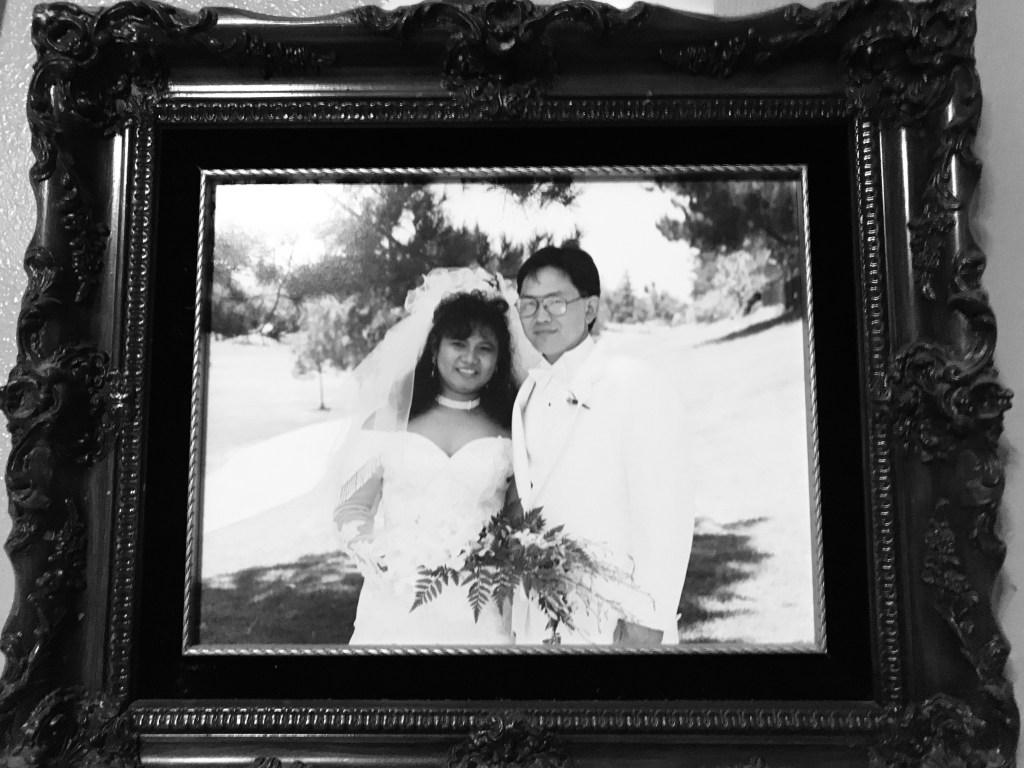
My story I decided to tell was the discovery of my parent’s mindset. Despite living here in America for over 20 years, my parents still hold the Filipino mindset they had in the Philippines.
Q: Why did you choose this idea?

A: Living in America my whole life, especially in Southern California, I thought everyone around me would have the same mindset. I thought everyone would be open minded and nonjudgmental, but my parents proved m:e wrong. My parents immigrated from the Philippines in the 1990s to live a better life. Despite being here for years, having a family and raising three children, my parents still held onto the mindset they grew up with in the Philippines. Many of their believes were still shown through their parenting when I was growing up and I had to realize that my American way of thinking was completely different from theirs making it harder to communicate.
Q: What did you hope to communicate?

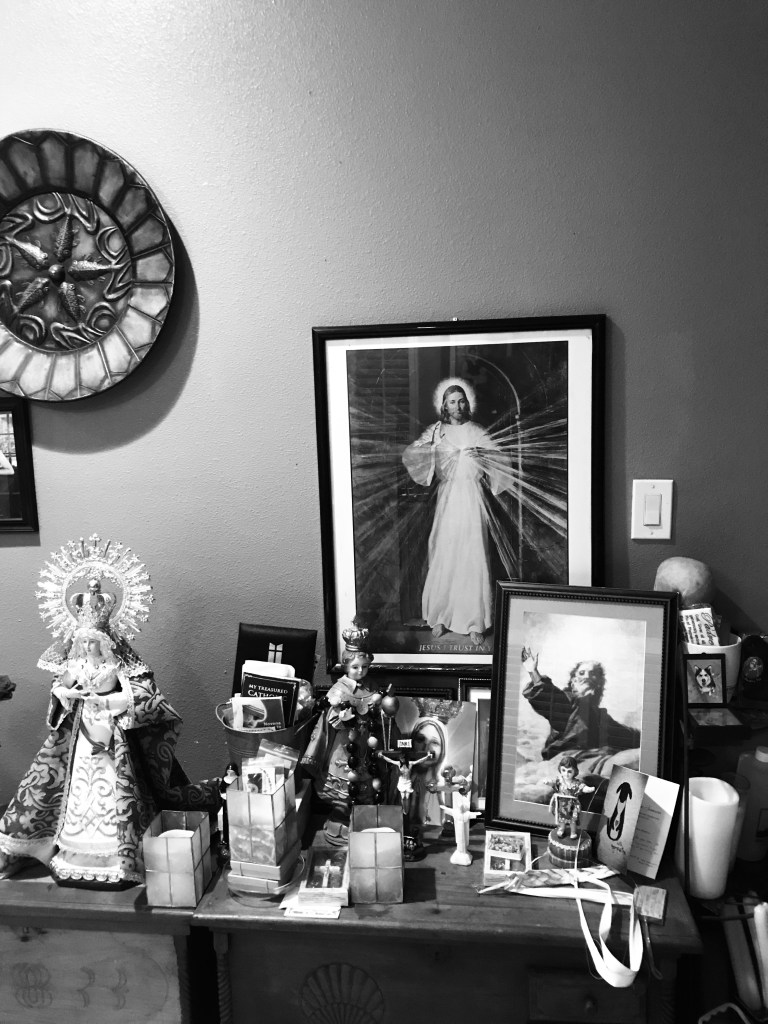
A: In my pictures, I hoped to communicate how much my parents held onto their believes even though they’ve been living in the American culture for years. My parents have traveled around the world as well, exposing themselves to different cultures and different ways of living. I soon realize that the most prominent Filipino trait they still hold to this day is their stubbornness. This trait is a good and bad thing to have. When I talk to my parents, their is no way to persuade them, because that trait they posses is stronger than their trait of understanding.
Q: How successful do you think you were?

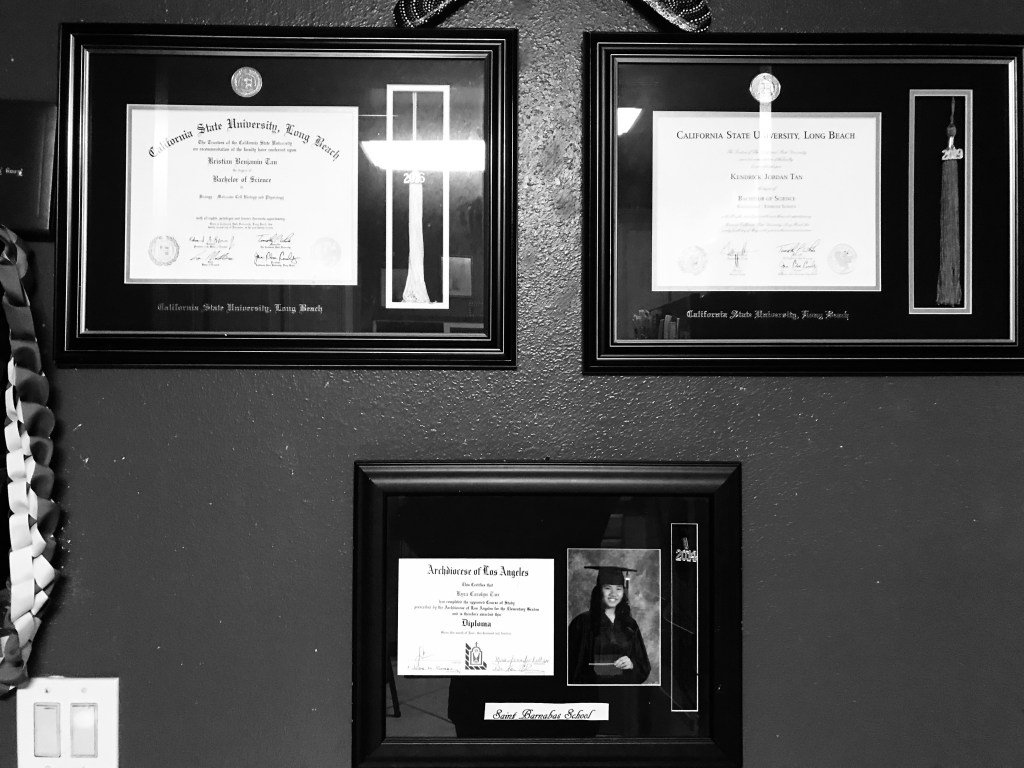
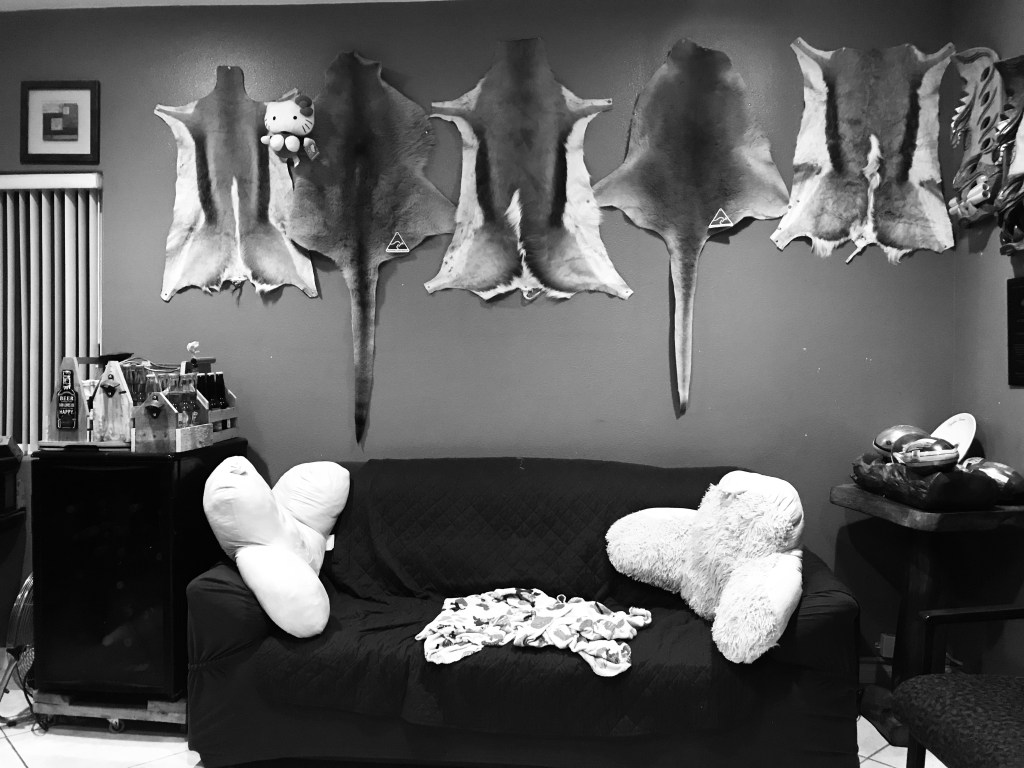
A: I don’t believe I was successful because the pictures I took were just still pictures of things in my house. If a person were to look at this, they wouldn’t know what to think.
Q: What would you do different if you did it again?

A: I would take pictures of them in front of the things they strongly believe in that grew from their Filipino culture. And along with that I would take a picture of things that I strongly believe in that grew from my American culture. These pictures would show the comparison between my mind growing up in American and their mind growing up in the Philippines and living in America.

Q: What is another idea you might explore through “shocking art”?

A: Another idea I might explore is the revelation between corruption of the governments in third-world countries.
#5 Storytelling

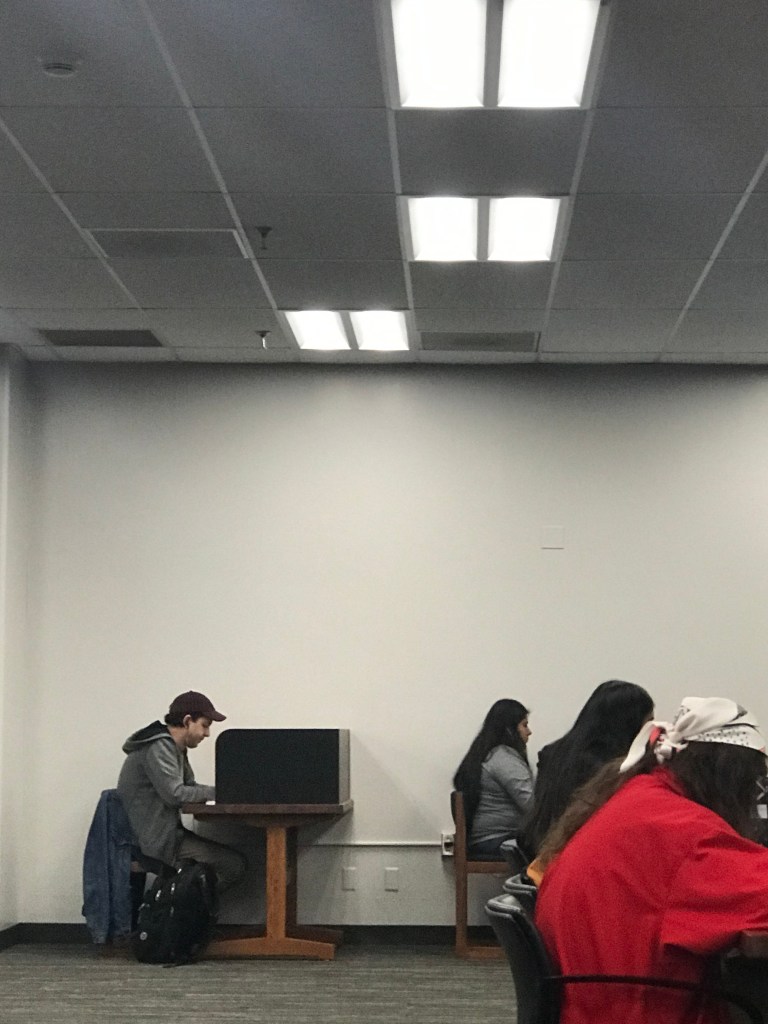
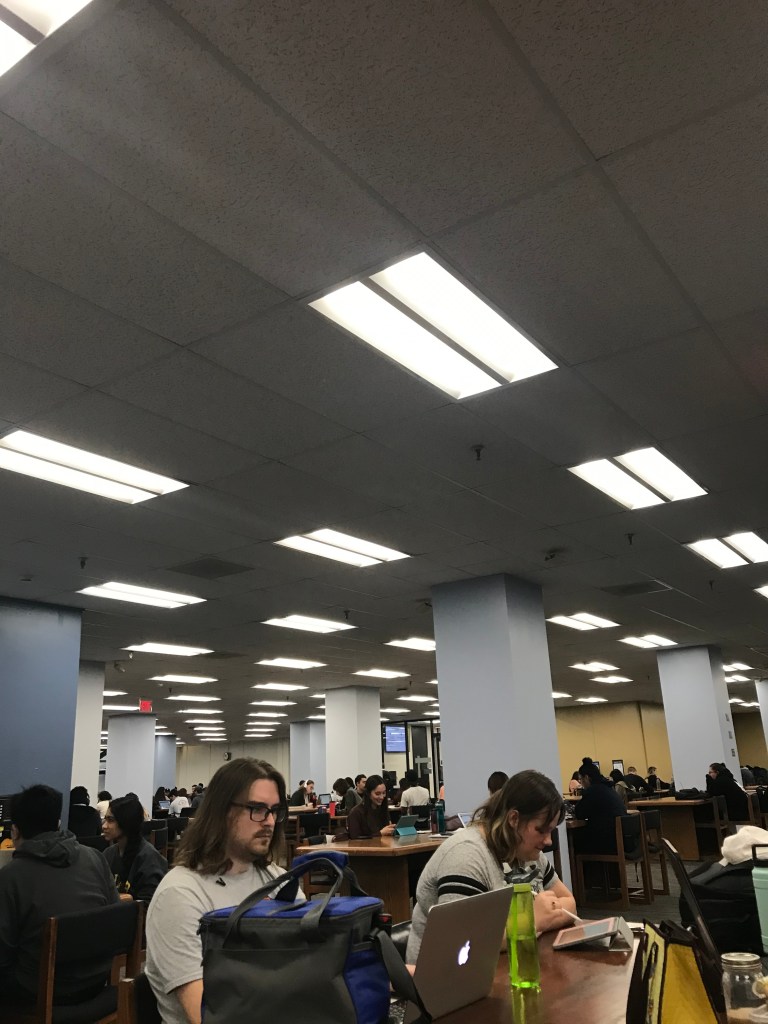
The basement of the Library is where students come to work.
People from all different majors, backgrounds, friend groups come together to meet here in this open space.
If not with friends, students choose to escape the chaotic world by sitting by themselves in these tables, separating them from the social world.
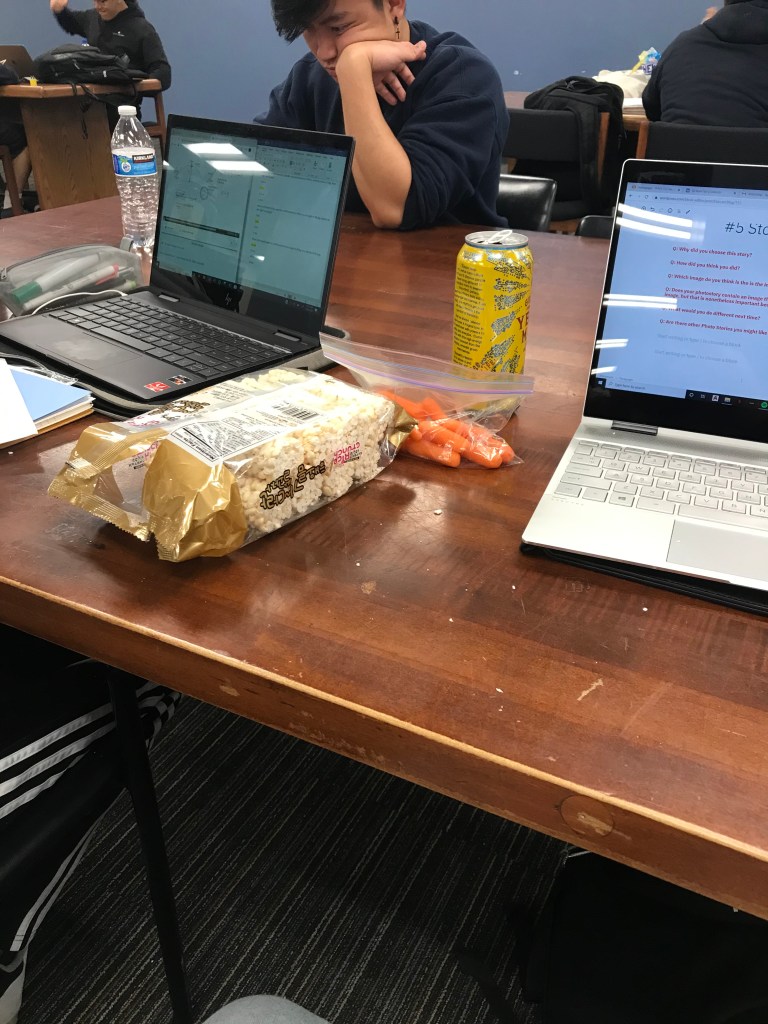
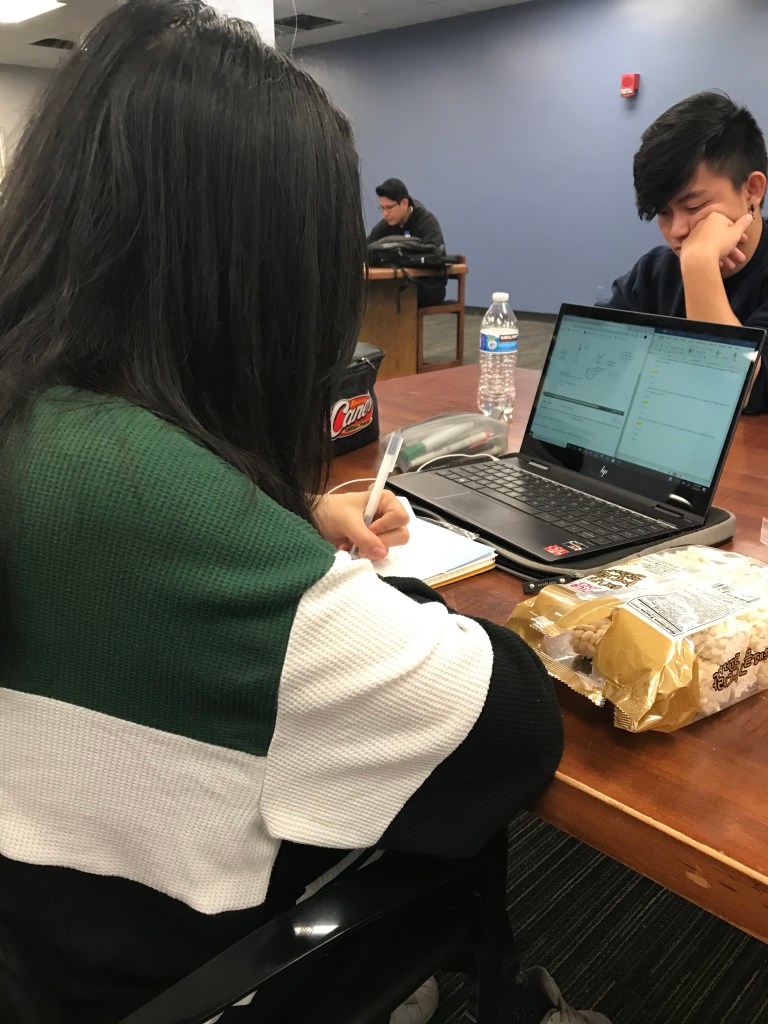
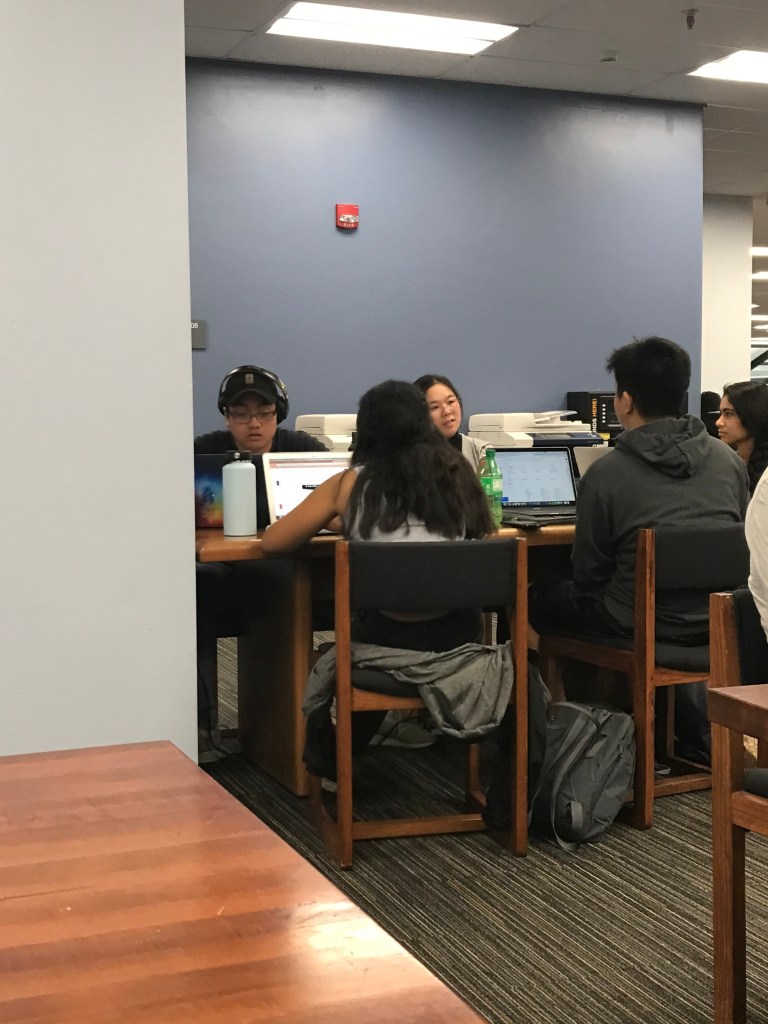
Here in my individual space, I am studying with two friends.
I feel comfort with these two people even though there are hundreds of people all around me.
My focus is with them and my work.
Q: Why did you choose this story?

A: I chose this story because I’ve decided to notice the surroundings around me and compare it to my surrounding. There’s a world out there and I’m unaware of and I often forget that my world isn’t the only one that people live or appear in.

Q: How did you think you did?

A: I think I did the bare minimum for capturing these images. I did this in the comfort of my seat. But even when I took these pictures I started noticing the differences.

Q: Which image do you think is the is the individually “best” image in your story?

A: I think the best image is the one where the student is sitting by himself. I think it really captures how some people can deal with the social world even if they’re by themselves.

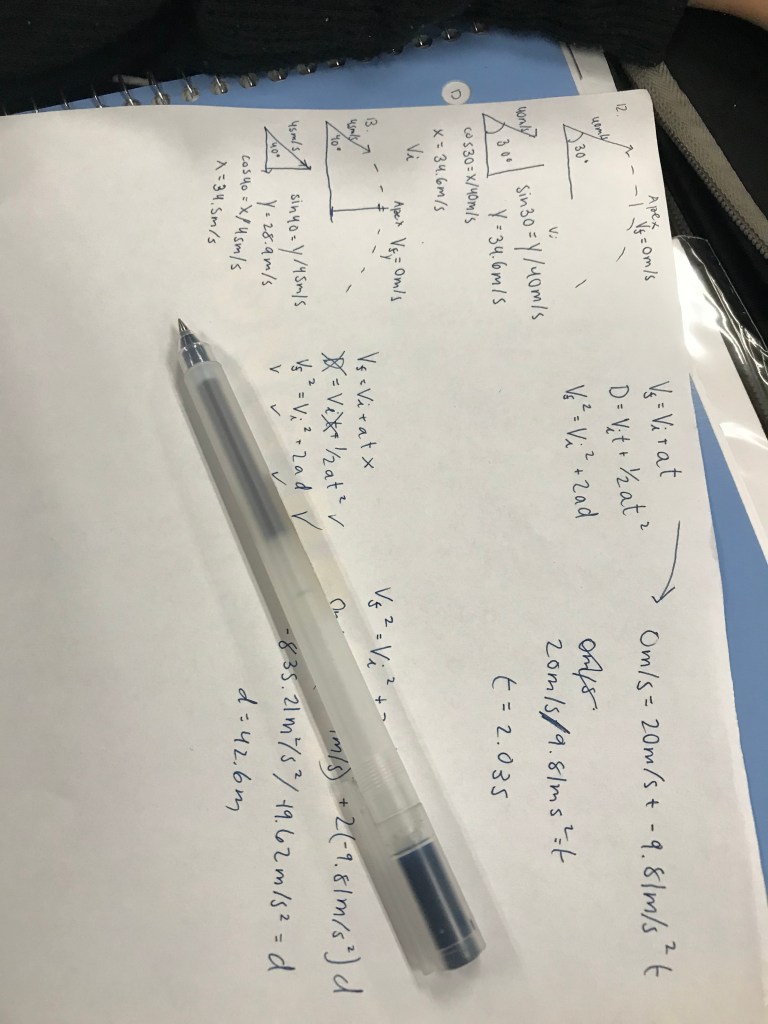
Q: Does your photostory contain an image that you think is not, by itself, a “great” image, but that is nonetheless important because it helps to tell your story?

A: I think the last image isn’t considered great by itself. When people look at it, it is simply just math. When I add the description, it makes more sense because I explain that I can be focused, even with the loud social world around. I can still stick to my world even with everyone else’s world happening.

Q: What would you do different next time?

A: Next time, I want to capture more activities that people are doing. I want to capture if they are hard at studying, or it people are socializing with one another, or if people are doing projects. I want to also capture people that just met, strangers sitting next to each other, people that have known each other beforehand, and so many more relationships.

Q: Are there other Photo Stories you might like to tell?

A: As of right now, I cannot think of any. But even if I would like to do a photo series, I would rather picture it in my mind rather than take a photo of it.

Artist Conversation #1

Cassandra Aguilera

Exhibition Information

  • Artist: Cassandra Aguilera
  • Exhibition: Metal and Jewelry
  • Media: Copper, Brass, Installation
  • Gallery: LBSU School of Art, Gatov Gallery West

About the Artist

Cassandra Aguilera, goes by Cass, is an undergraduate student at Long Beach State, currently in her last year. She is enrolled in the CSULB School of Arts, in the Studio Art program. She has an emphasis in metal work and prefers to us metal in her work. In her submission, she was tasked to make a metal bowl in one of her classes. She chose to use copper to create her bowl, along with the additional glasses used to add color to the piece.

Formal Analysis

Aguilera’s art piece was a bowl made out of one sheet of copper. It was curved to show that it was a bowl, but not to the point where it’s only purpose was a bowl. She included holes and string intertwined in her piece to add elements. It was smooth throughout the piece, with popping with blue and green colors. In order to achieve this this shape, Aguilera took the sheet of metal, heat it up, and dunked it in cold water so that she can mold it into the shape she wanted. To get the colors, she got the bowl she made and layered a thin powdery glass where she laid on the bowl and placed it in the furnace, where the glass melted. To get the burnt parts, she just let the furnace do it naturally. When I asked why she did this, she simply said it was asked of her for her assignment.

Content Analysis

When I asked what motivated her to make this piece, Agiulera simply just answered that it was for her metal class. The assignment she was given was to take a sheet of metal and turn it into a bowl. Whatever other elements she added, her professors would support. She just wanted to create something unique. She had no story to tell about the bowl, but wanted to show it’s uniqueness with the twine, holes, and colors.

My Experience

I definitely learned more about art and the art program we offer here at CSULB. When talking to Aguilera, I learned more about her interest and her take on art. She wants to emphasize in metal pursue her career in studio art. The piece she made amazed me because she told my it only took 25 hours to create. Knowing that she can make this wonderful art in a short amount of time impressed me. When I saw it, I had many questions on how she achieved the looks, but she answered with simple answers to achieve the astonishing look. I was overall impressed, and I did not think that this art was easily created. Her reasoning behind it made me realized that not all art has a meaning. Her art was made because it was an assignment and her approach to for her to have fun with her work. I was also impressed with her techniques to achieve the look. The chemical processes to achieve the color and shape of the piece impressed me because I was shocked that science was included in art. When I think about art, I do not think about science. Aguilera opened up my mind to the thoughts of mixing art and science together. This interested me because I love science, and knowing that science can appear somewhere that I didn’t think related to science, I was impressed.

#4 Drinking and Drawing

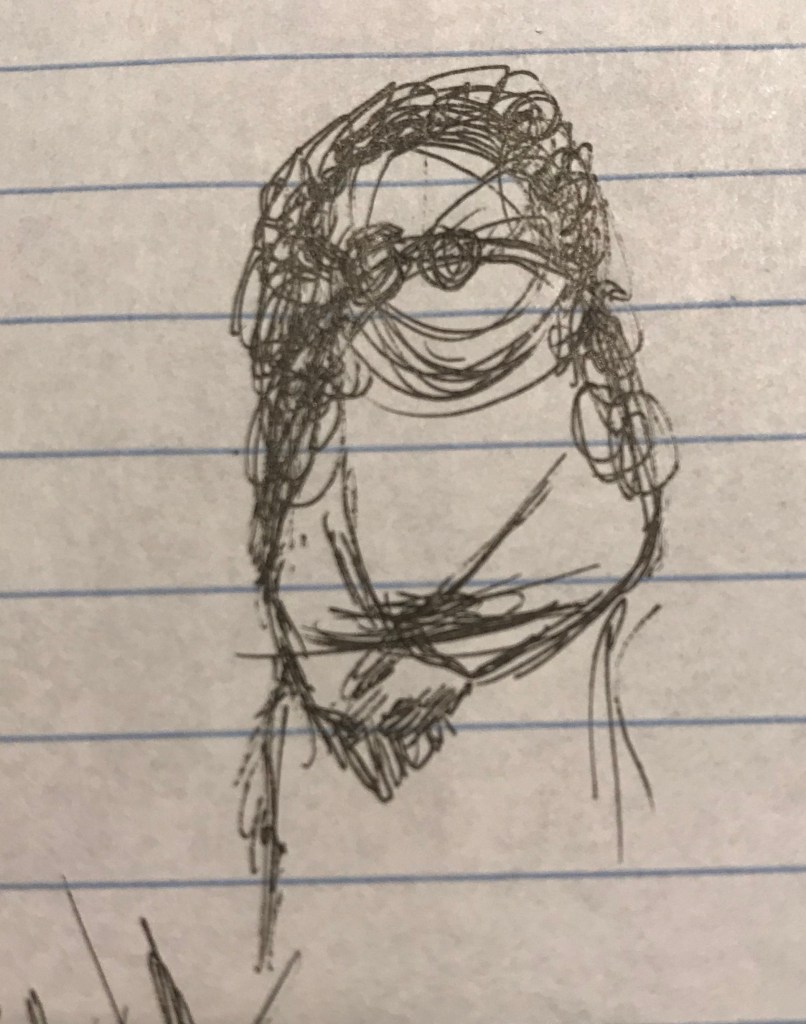
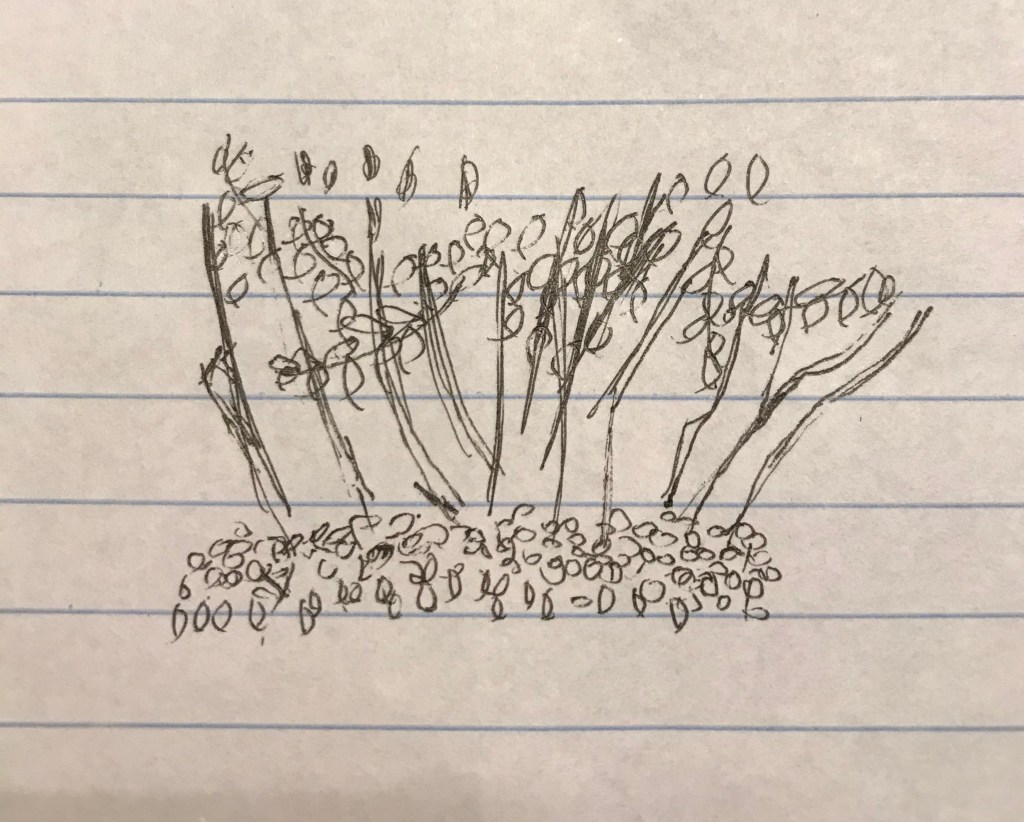
Q: Was it fun? Was it frustrating? Do you like to draw? Will you ever try again?

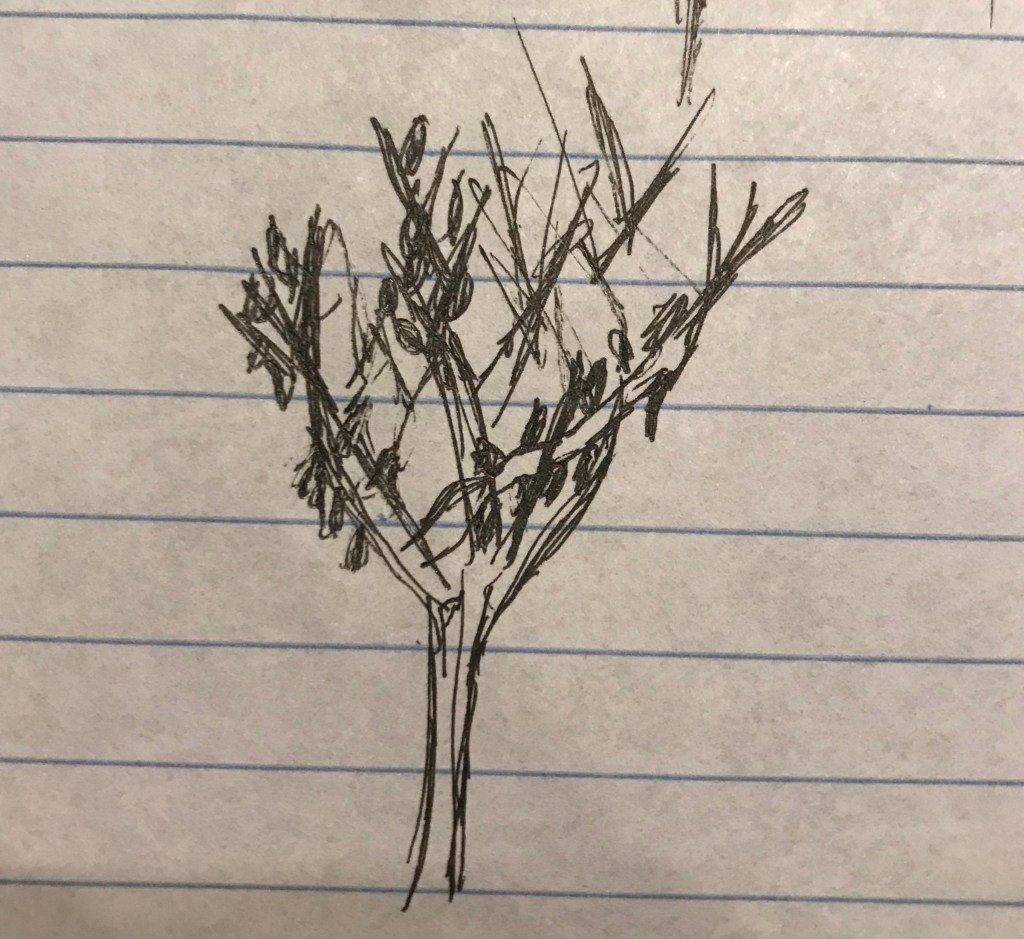
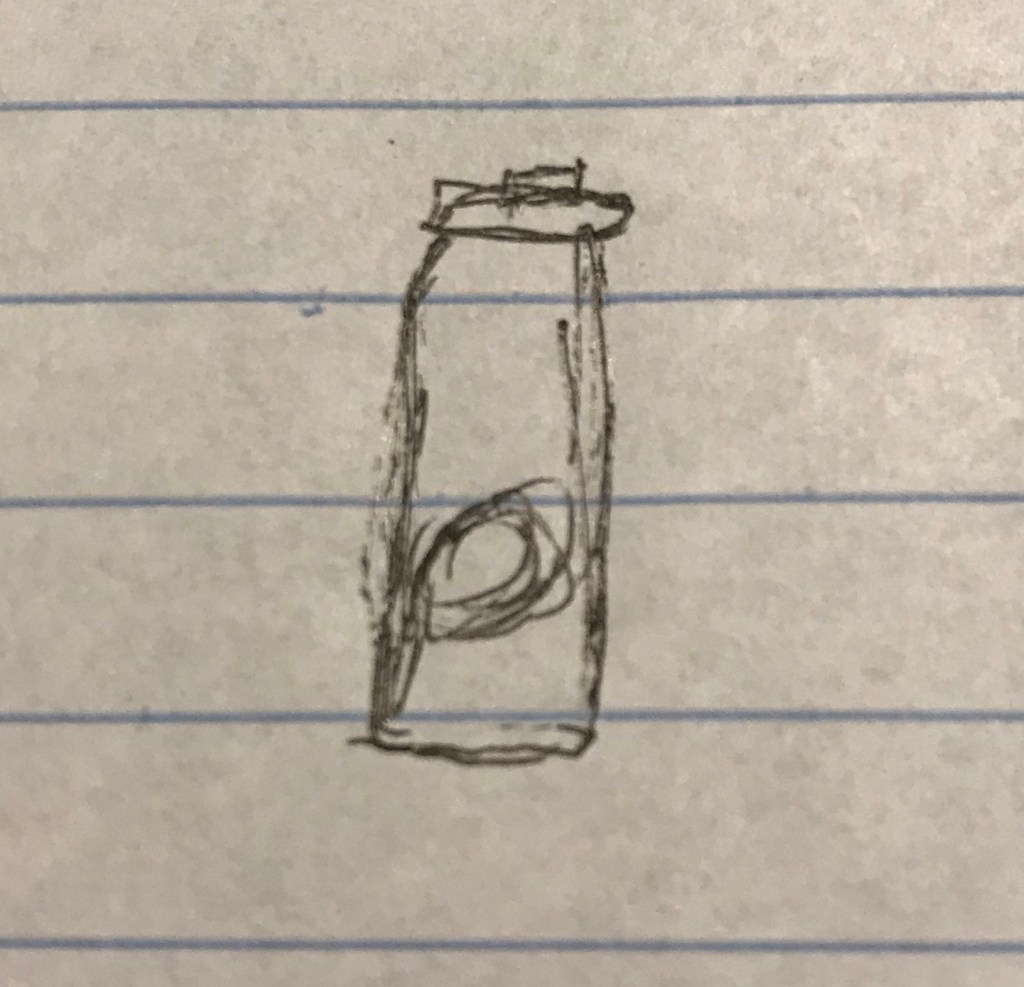
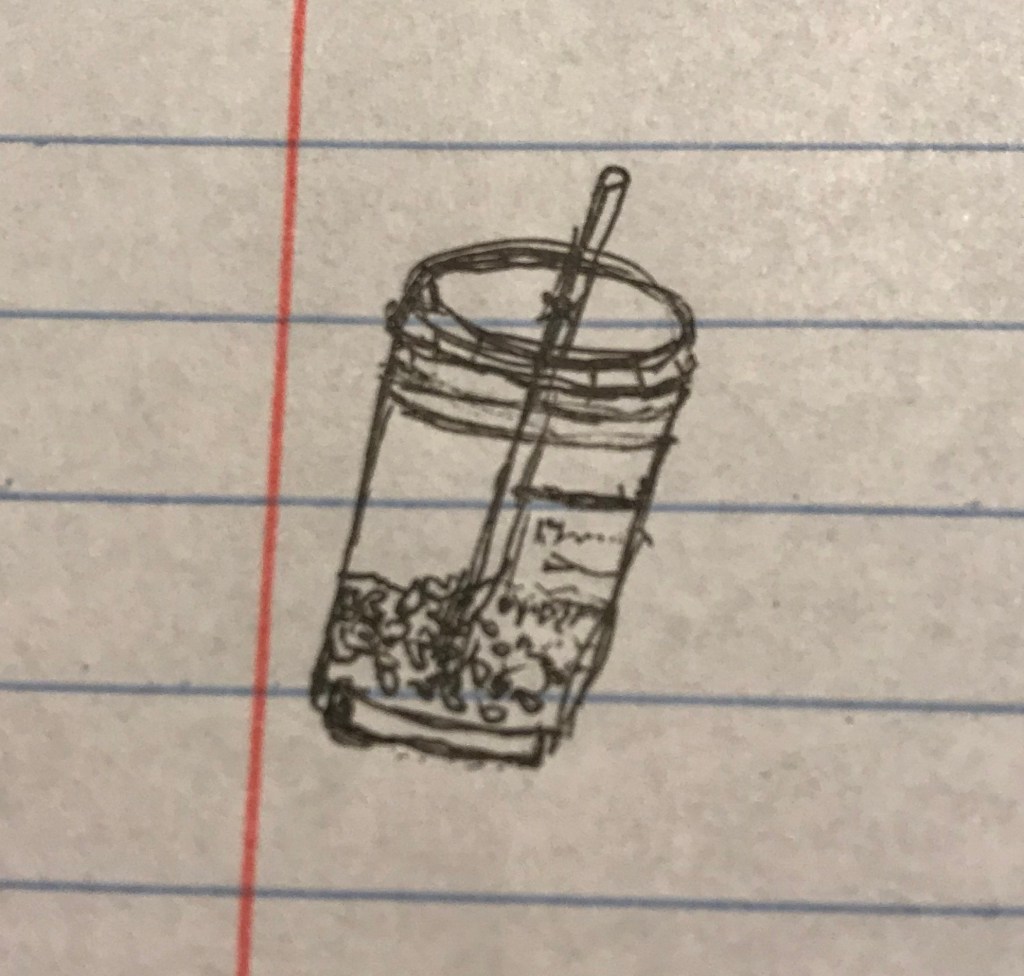
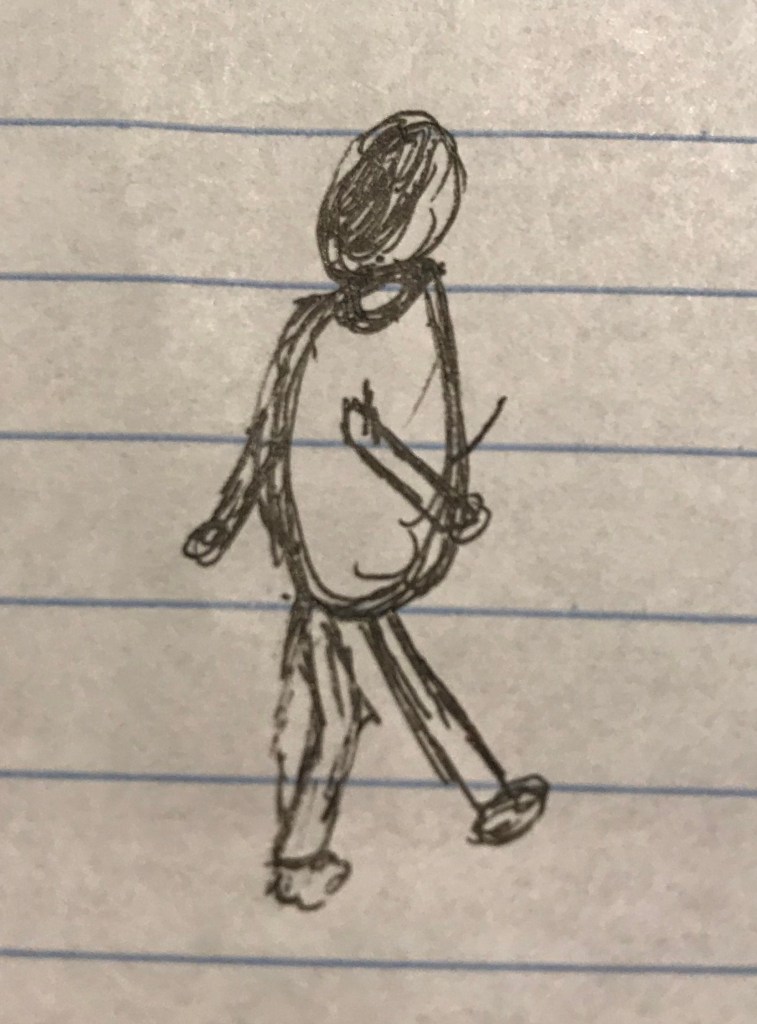
A: I found this assignment interesting because it forced me to really focus on my surroundings. The assignment was fun and relaxing rather than frustrating because I rarely get to draw and sketch. I like to draw because it allows be to be creative and is a great way to pass time. I have drawn in the past and will continue to do it whenever I have free time.

Q: Do you think you practiced for 100 hours, or 1,000, that you would get a lot better?

A: If I was able to practice for 1,000 hours or more, I believe my art would improve a lot.

Q: What us your major? Can you think of any ways that simple sketching of some kind could be useful in your major?

A: My current major is Civil Engineering and many aspects of engineering include sketching in some way. Civil Engineers utilize sketches and diagrams to portray their ideas or projects. Many of my classes require sketching to show different mechanics and forces.

Q: Is Drawing a Language? Can drawings say things that are hard to say with words?

A: Yes, I believe drawing is a language. Drawing can convey ideas without words because it has been done before by the Egyptians with hieroglyphics. As well, many artists can communicate their feelings or ideas of the world through drawings; Some of these feelings might not be able to translate accurately through words so artist utilize drawings. Those who view their art can interpret how an artist might feel or interpret their message.

#3 Finding Art

Q: Discuss the Form, Aesthetic, and Content of your art

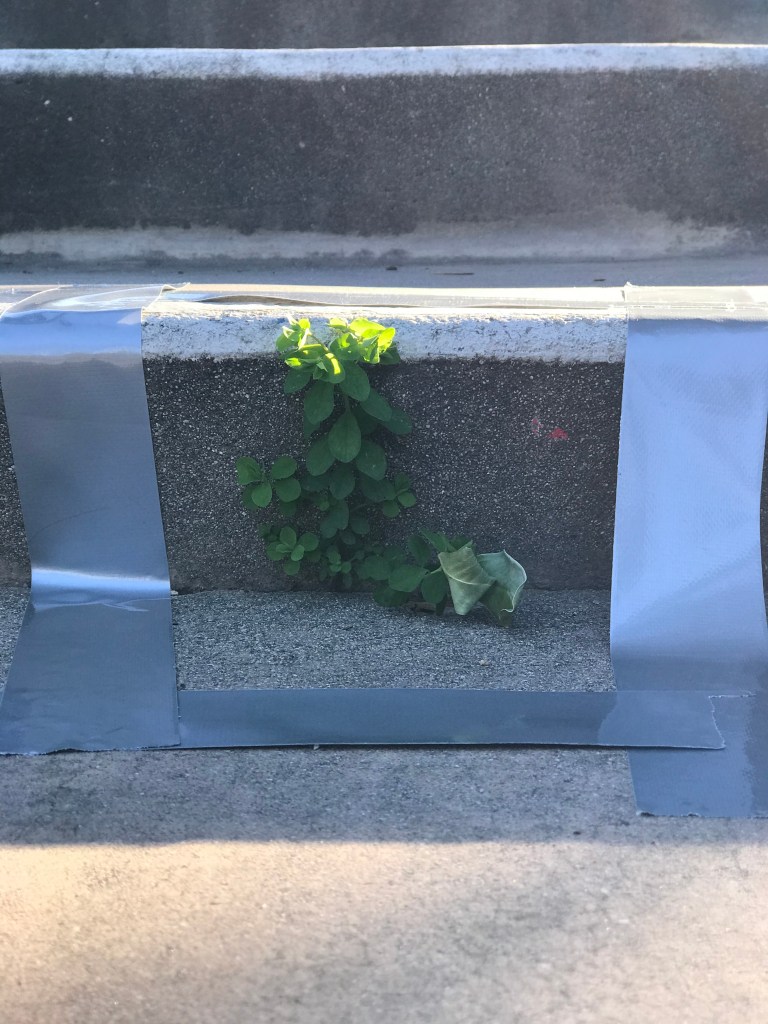
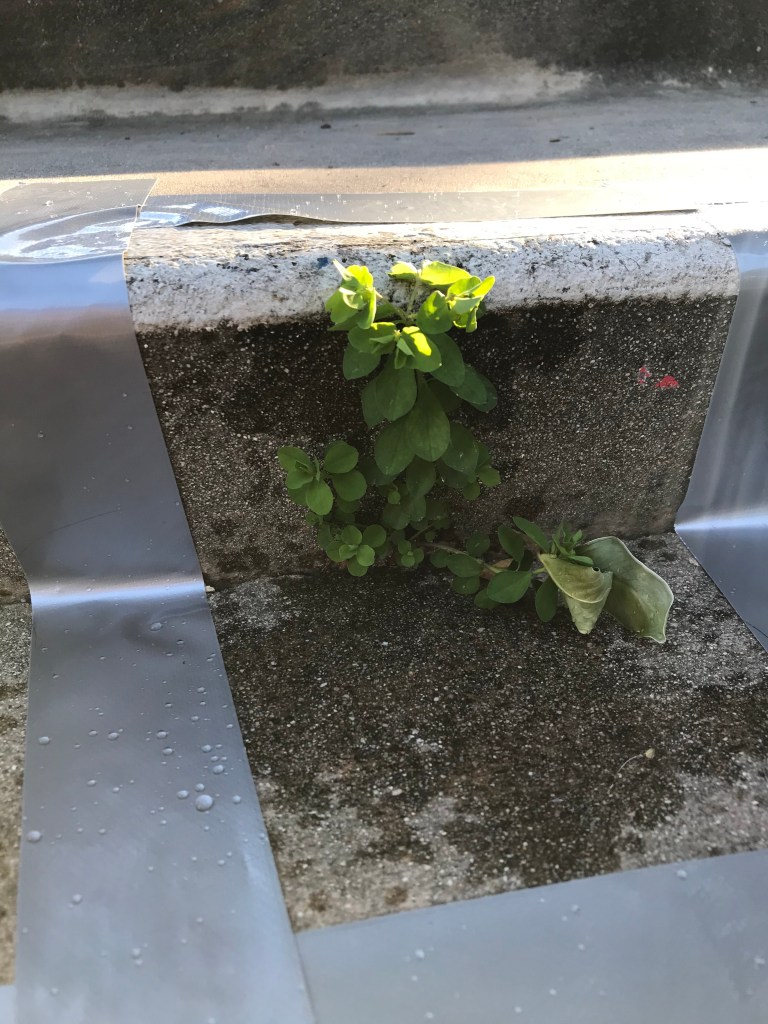
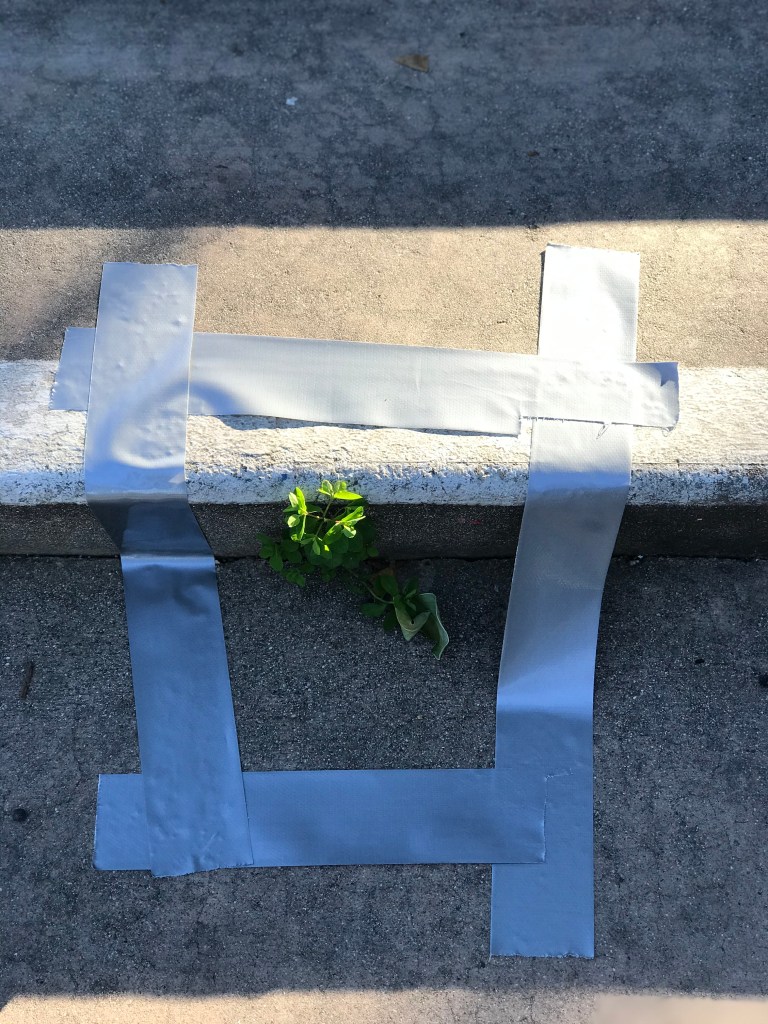
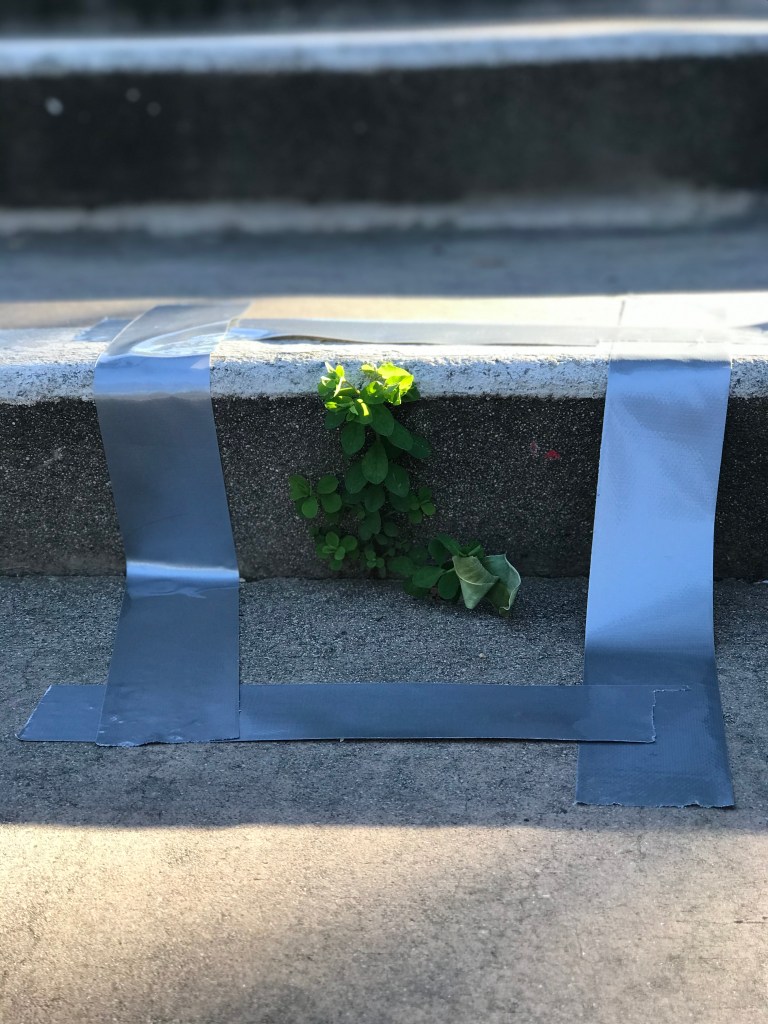
A: The form of my art is from nature itself. I had no control on how the art work was formed, but the only control I had was choosing weather it was art itself. The aesthetic was also nature itself. It was a tiny plant growing through the cracks of the campus concrete stairs. The content was the thought that a tiny plant can grow through a concrete slab.

Q: Was your Art, Art before you put a rectangle around it? Why or why not?

A: This Art was not a form of art before I put the rectangle around it because it was just a normal plant that you see everyday on the floors. It was nothing but a weed in the stairs that would have been passed by everyday.

Q: Will your Art be Art after the rectangle is gone? Why or why not?

A: This Art will not be art when the rectangle is gone. It is a plant that sprouts just like every other plant in on the cracks of the concrete. What makes it special and art is the people that decided to put tape around the art.

Q: Does art reside in the body of the object? So that some objects are art and some objects are not art? Explain. How do we know which objects are art and which are not?

A: Art does reside in the body of the object. The whole plant on the steps of the concrete is the art. Since we had a small rectangle, it only showed the steps and the plant. I consider both objects to be part of the body of art.

Q: Can art be something other than an object?

A: Yes it can. Art can be in different forms such as music or dance or written literature.

Q: Does art reside in the experience of the viewer? So that it isn’t an object per se, but a way and a choice of taking the time to have a viewing experience? Explain.

A: I like to believe so. For instance, I can listen to rock music, but I wouldn’t consider it to be art. I would consider it to be music that I don’t like. I believe that art is all about how the person sees it or hears it. A couple pieces I saw last Wednesday I didn’t think it was art, and the artists also tried convincing me it was art, but I still didn’t see it that way.

#2 Finger Painting

Q: What was the experience like?

A: The experience was very nostalgic. I got flashbacks of simpler times when I was a kid and I didn’t have to worry about making a mess because I knew that I didn’t have to clean up the mess.

Q: Was it easier, harder, or different than you expected?

A: It was actually easy but hard to not focus on what I was doing. I wanted to do this activity freely with nothing planned out, but as I started this activity, it was hard because I had to choose which colors to use, what paper to paint it, and how to paint it. There was always questions that popped in my mind on how to approach this. I tried my best to ignore those questions and do it freely, but it was difficult to do this activity freely.

Q: How was the experience of making a painting with no subject? Confusing & Frustrating? Liberating & Inspiring?

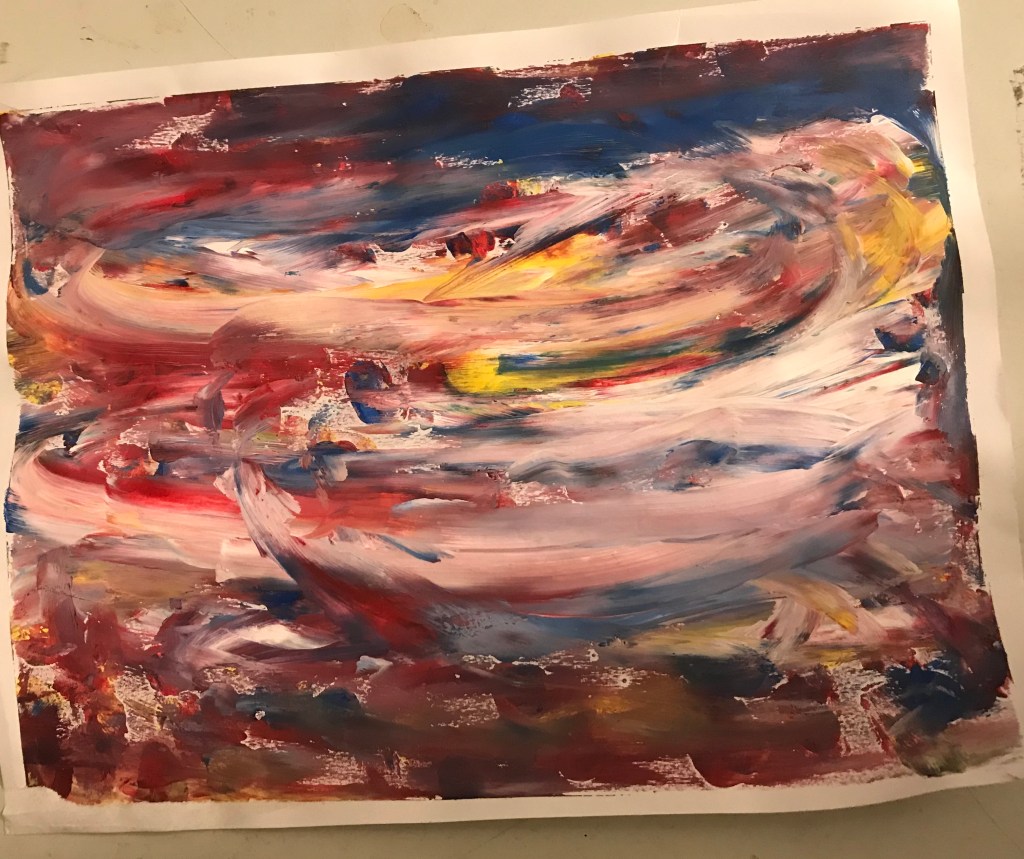
A: Doing this activity freely was calm and peaceful. I was painting something that was not confined to rules but the more I thought about the end goal, the more rules I gave to myself, making the activity frustrating. I started making plans on how to finish the painting and it ruined my experience. This activity was all about painting with no subject, but the closer I got to finishing the painting, the more frustrating it got to avoid a subject. Although my painting clearly has no subject, I don’t believe I finished the painting freely.

Q: How does this compare to other paintings you have seen?

A: It is simply abstract art. It has no subject, it has no clear message but nonetheless it is art. Compared to this art, there is no message. Other pieces of art have a deeper meaning. My piece has no deeper meaning. To me it is just paint on paper, but it is art.

#1 Maintenance Art

Q: How did you feel performing Maintenance Art in the area around the USU?

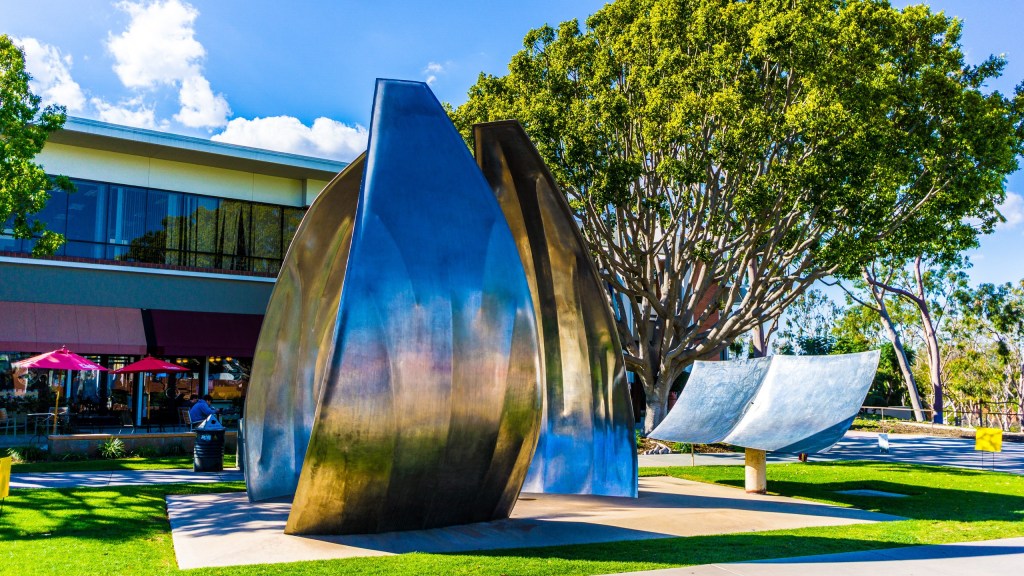
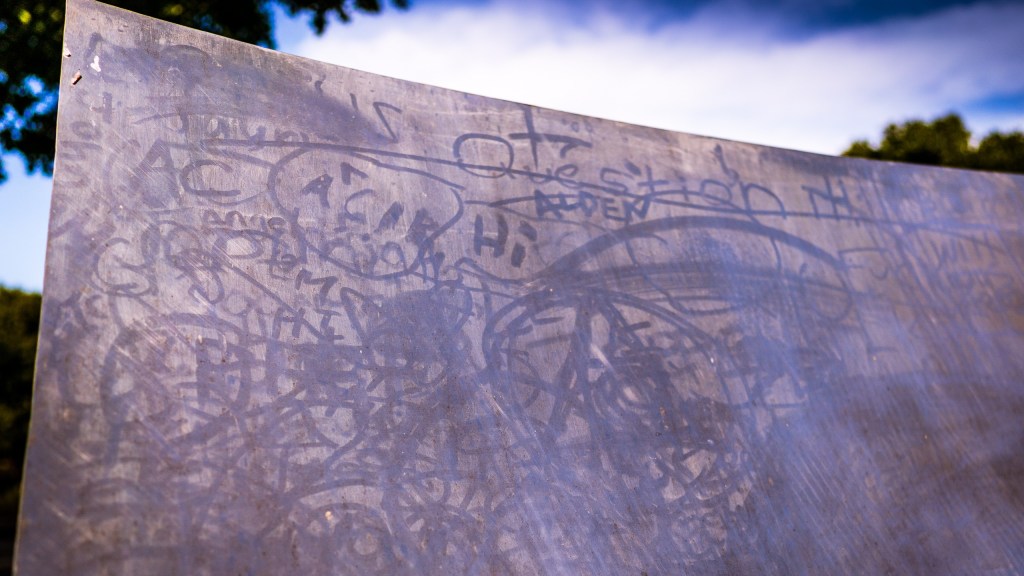
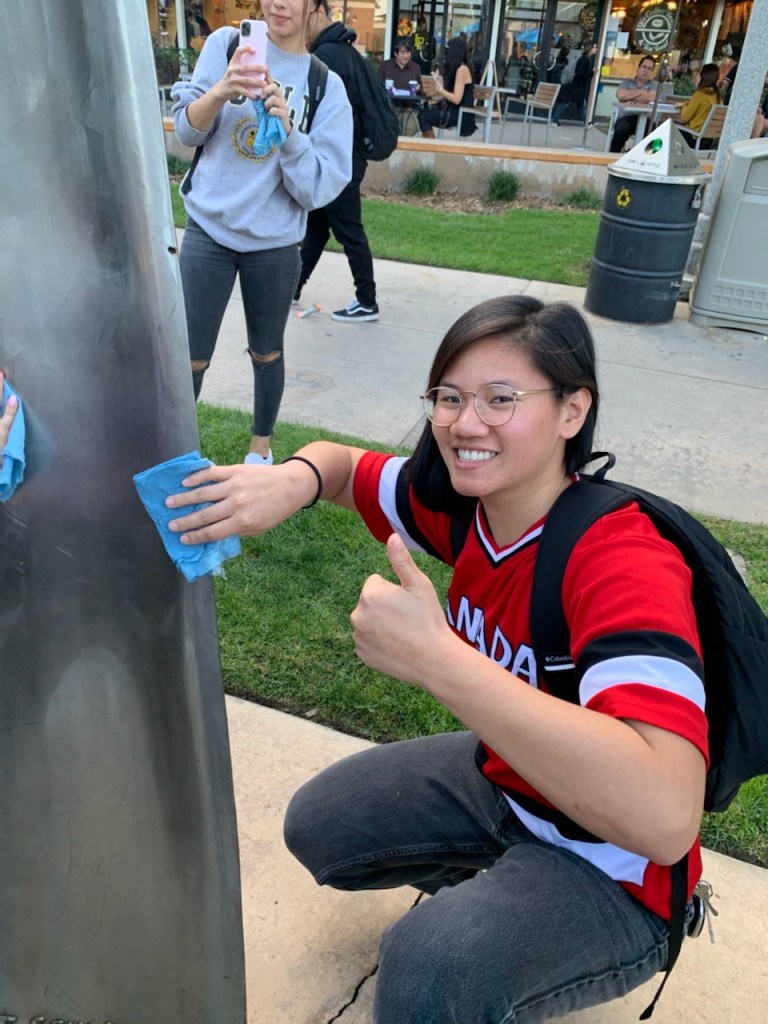
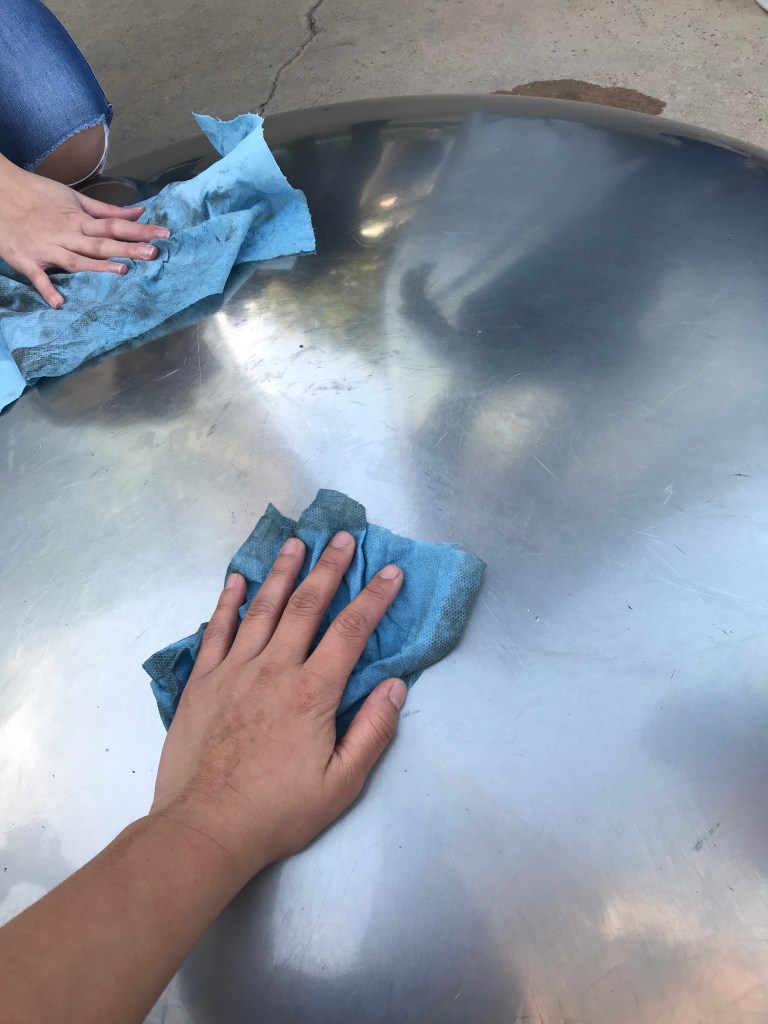
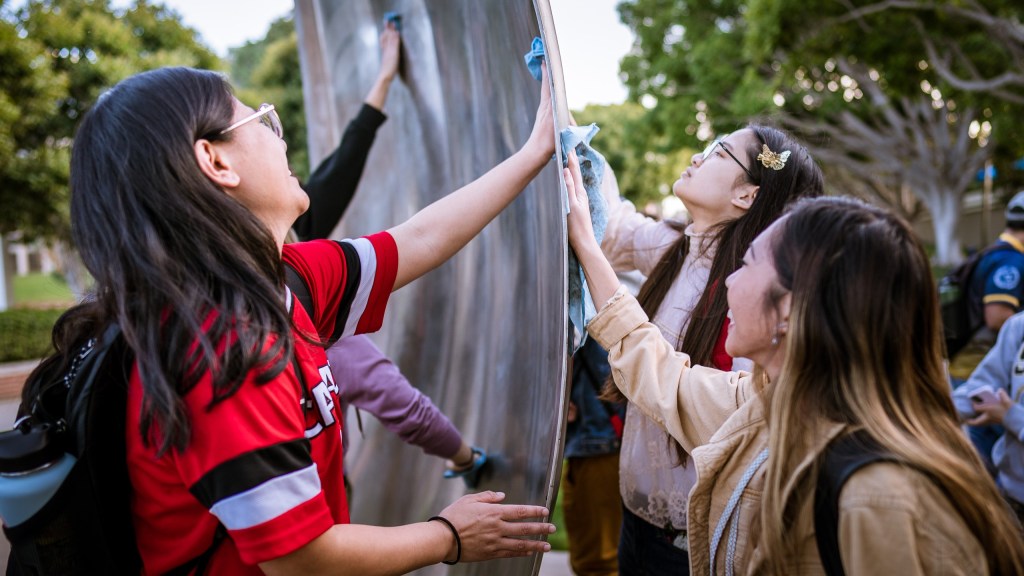
A: At first I didn’t know I was “performing.” I thought I was just cleaning up the NOW sculpture, but after discussing the definition of cleaning with the class, I understand that I was performing. I felt uncomfortable at first, because the public was looking at us weird for cleaning the sculpture, the more I performed, the more comfortable I go.

Q: How are Mierle Laderman Ukeles cleaning the steps of an art museum and Richard Serra flinging molten lead against the walls of an art museum different? How are they the same? Are one or both “art”? Are one or both “not art”?

A: Both acts are simply art. The only difference between the two is that one maintains art while the other creates the art. Ukeles cleaning the steps of an art museum was similar to our Maintenance Art performance. We were cleaning someone else’s art while creating art by our actions. On the other hand, Serra flinging molten lead against the wall was opposite of what we did. He was creating art, making a “mess.” In both performances, they were making art.

Q: Was Mierle Laderman Ukeles’ Maintenance Art performance at the Wadsworth Atheneum “art”? Did the fact that her performance was at an Art Museum make it art? What if instead, she had simply gotten hired as a janitor at a factory somewhere and performed that job for 6 months? Would that have been art? What makes an act “art” or “not art”?

A: Ukeles’ performance is still considered art. She cleaned the steps freely and was not hired to clean it. Because she cleaned it at a museum doesn’t mean that it is automatically considered art. If she were to clean the steps of another random building, it would still be considered art because she did it with free will. If she got hired as a janitor to clean the steps, then it wouldn’t have been considered art because she was asked to clean the steps. What makes an act “art” is the chose to freely create. Ukele’s freely created a performance in cleaning.

Q: Is an object or an action Art or Not Art because of some intrinsic property of the medium? Or because of the intention of the person performing it? Are all paintings on canvas art because paintings on canvas are exhibited in art museums? Is all house painting not art because we don’t exhibit painted houses in art museums? Can a painting on canvas ever be not art? Can painting a house ever be art?

A: Because an art piece is not in a museum, it does not mean that it can never be art. The best thing about art is that it can never be a specific action or object. I could stand still for 5 minutes and that would be considered art. Art in museums only display one type of medium, because it is one of the types of arts that can be captured and shared to the world. Actions are considered because there is a purpose. A person protesting is considered art because they have a purpose. Art can be anywhere including inside our homes. Anything made or acted is always considered art.

Q: Has Mierle Laderman Ukeles, or Jennifer Lopez, made you think differently about “Women’s Work”? Is “Women’s Work” ever art? If yes, when? If no, why not?

A: Despite how degrading it sounds, “Women’s Work” is considered art. Ukeles or Jennifer Lopez has changed my perspective. When people usually think of the term “Women’s Work,” they apply it to stereotypical women work like house work or secretaries, but I believe people think of that term because of the art they’ve been exposed to. Lopez’s music video has changed my perspective because she displayed “Women’s Work” in a positive way. She broke the stereotype of work that women do and portrayed to be an empowering act of art. By displaying these acts, she convinced me that “Women’s Work” is truly art.

Q: In class we discussed the woman who cleaned Donald Trump’s Star on Hollywood Blvd. Whose Star would you get down on your hands and knees to clean?

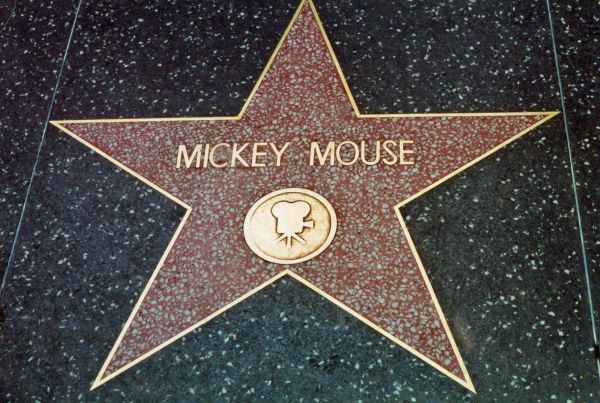
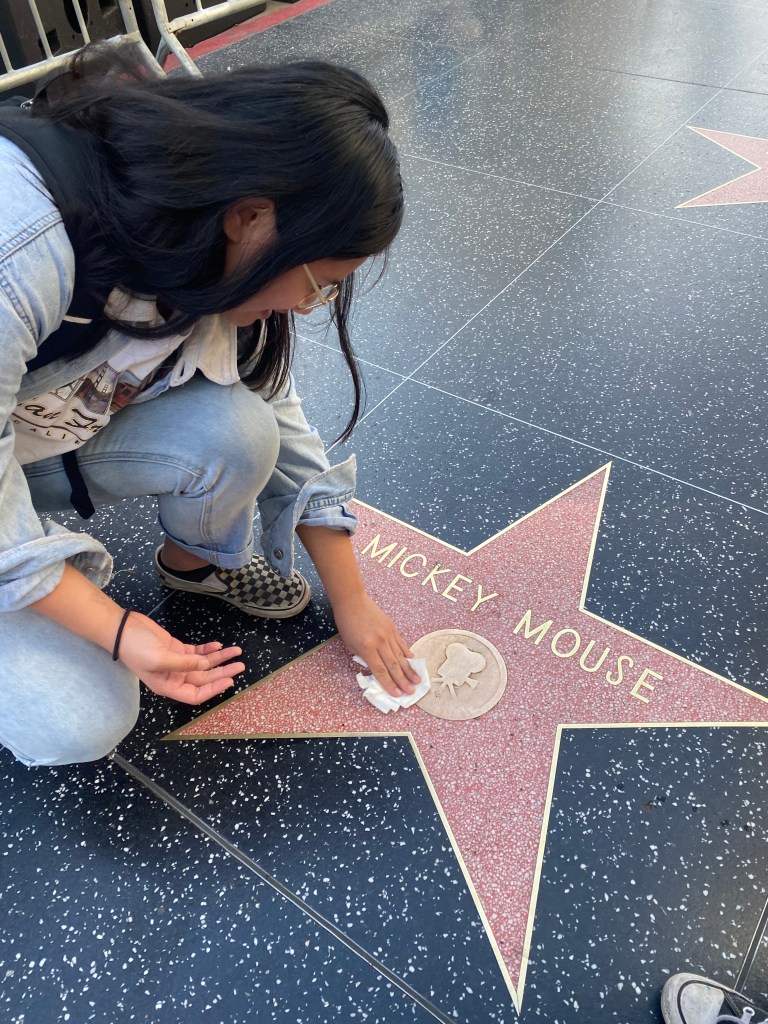
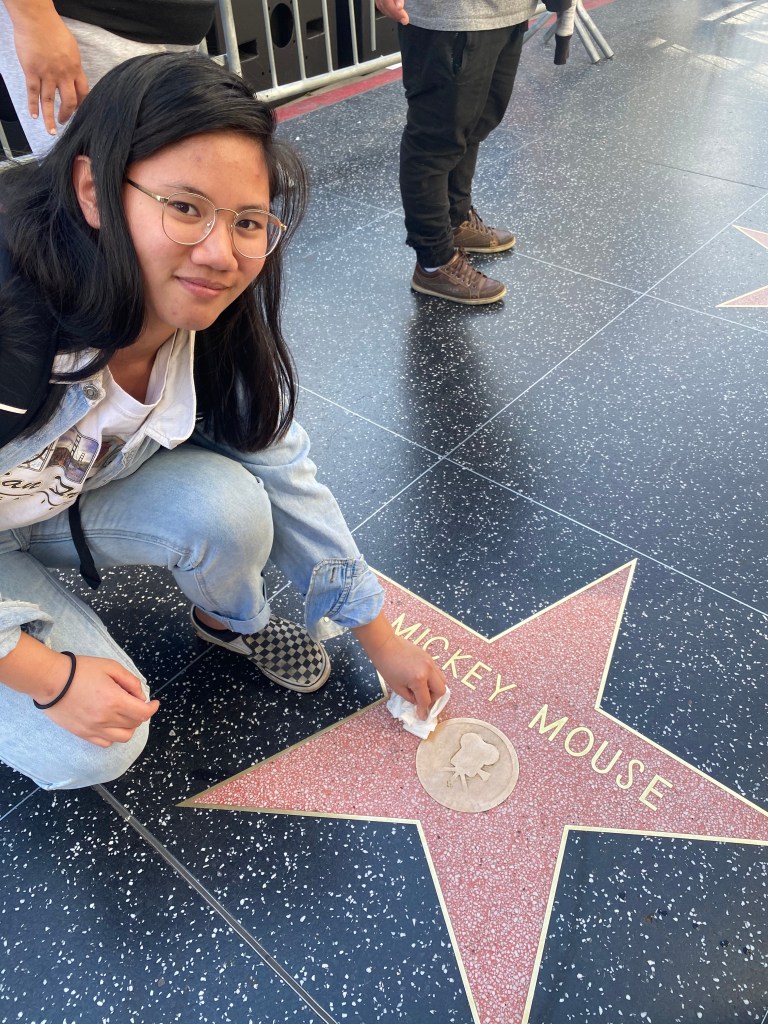
A: I would get down on Mickey Mouse’s star and clean it. Even though he is not a real person, I would get down on my hands and knees and clean his star.

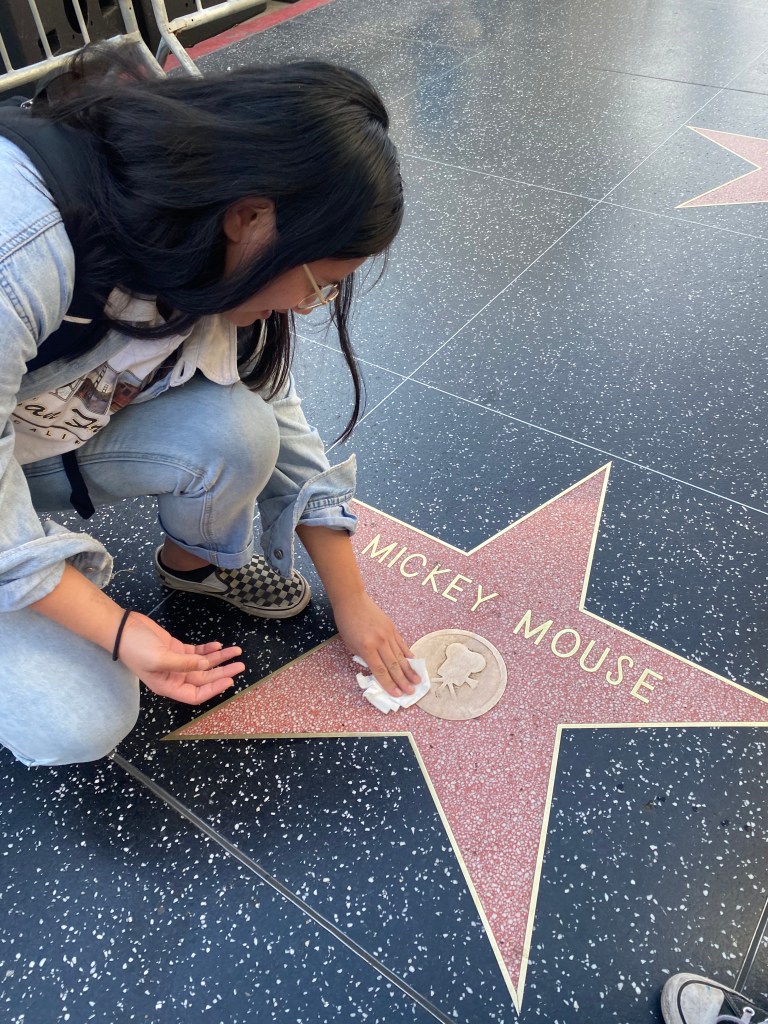
EC – Maintenance Art a Mickey Mouse’s Star on Hollywood Blvd.

Q: Why did you choose this person’s Star?

A: I chose Mickey Mouse’s star because I simply love Disney. I know it’s a cliche response but Disney is the definition of who I want to be in life. Mickey Mouse was a creation of Walt Disney, and that man inspires me because he create a new world for not only Americans to enjoy, but the whole world. To me, Mickey Mouse represents the ability to connect with the rest of the world.

Q: How did you feel performing you action?

A: Since I already did the Maintenance Art, I felt more comfortable performing this act of art in public. It did take a while because many tourist wanted to take a picture with the famous star, so I had to patiently wait my turn to get down on my hands and knees to clean Mr. Mouse’s star. I did get weird looks but I continued cleaning.

Q: Did it feel different from doing chores at home? How? Why?

A: It definitely felt different from doing chores at home. To me, this felt like a me paying respects to a significant figure in my life. At home, I am told to do these chores, I don’t do the chores with my free will. Going out of my way to ride a train all the way to Hollywood Blvd. to clean Mr. Mouse’s star was something I wanted to do. I went the extra miles to do this act of art because I wanted to.

Q: Was your performance “art”? Why or why not?

A: I felt like my performance was close to being art. Since it was busy and everyone wanted a picture of the star, I had to clean it quickly, which meant I barely cleaned it. If I had the star all to myself, I would spend time to clean the star and make it look new. I did the best I could do but I feel like I could do better.

Design a site like this with WordPress.com
Get started