Featured

#1 Maintenance Art

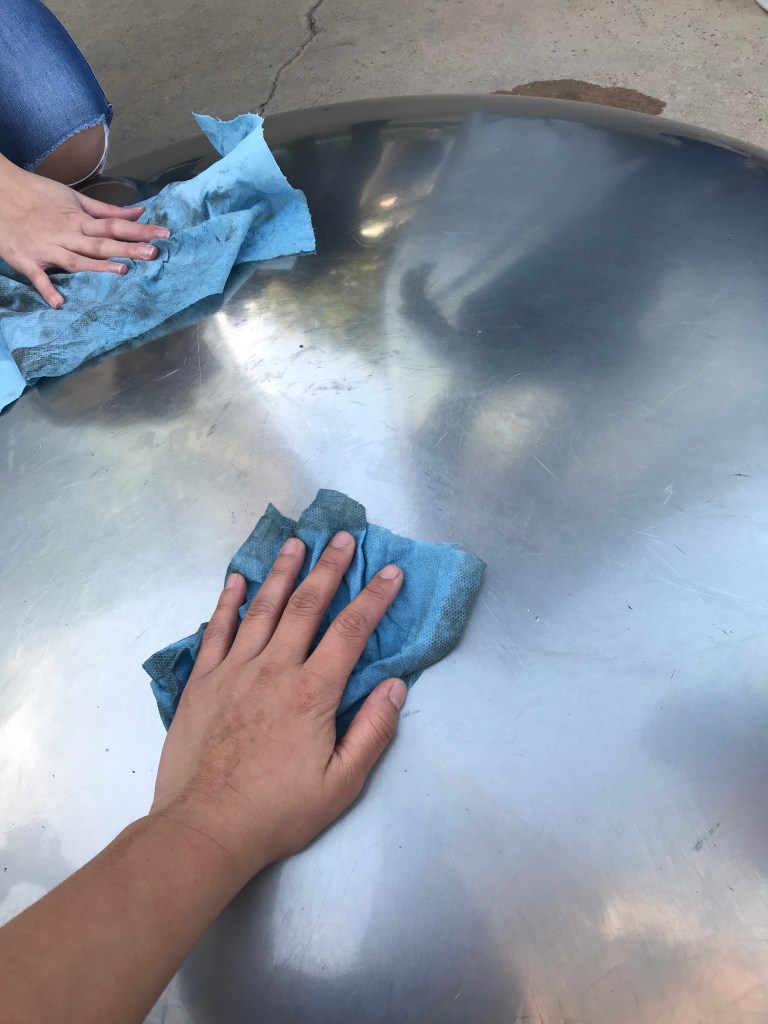
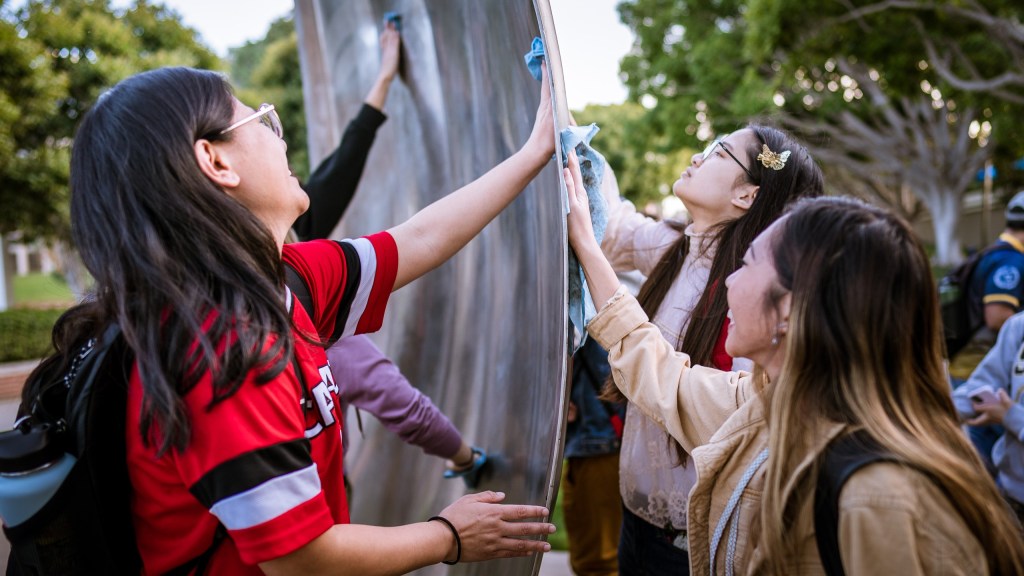
Q: How did you feel performing Maintenance Art in the area around the USU?

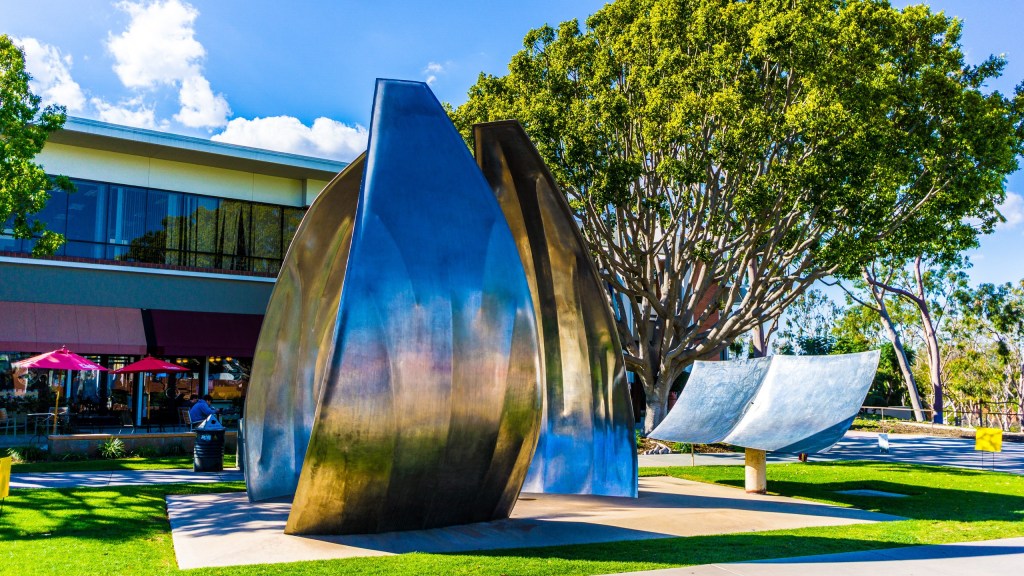
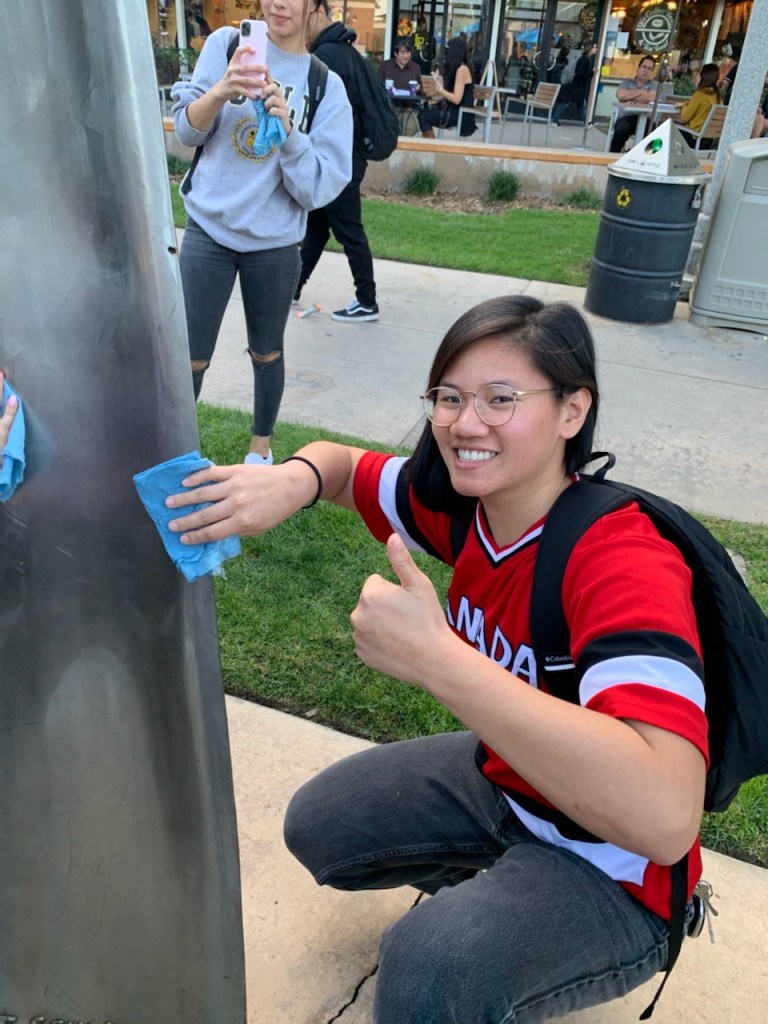
A: At first I didn’t know I was “performing.” I thought I was just cleaning up the NOW sculpture, but after discussing the definition of cleaning with the class, I understand that I was performing. I felt uncomfortable at first, because the public was looking at us weird for cleaning the sculpture, the more I performed, the more comfortable I go.

Q: How are Mierle Laderman Ukeles cleaning the steps of an art museum and Richard Serra flinging molten lead against the walls of an art museum different? How are they the same? Are one or both “art”? Are one or both “not art”?

A: Both acts are simply art. The only difference between the two is that one maintains art while the other creates the art. Ukeles cleaning the steps of an art museum was similar to our Maintenance Art performance. We were cleaning someone else’s art while creating art by our actions. On the other hand, Serra flinging molten lead against the wall was opposite of what we did. He was creating art, making a “mess.” In both performances, they were making art.

Q: Was Mierle Laderman Ukeles’ Maintenance Art performance at the Wadsworth Atheneum “art”? Did the fact that her performance was at an Art Museum make it art? What if instead, she had simply gotten hired as a janitor at a factory somewhere and performed that job for 6 months? Would that have been art? What makes an act “art” or “not art”?

A: Ukeles’ performance is still considered art. She cleaned the steps freely and was not hired to clean it. Because she cleaned it at a museum doesn’t mean that it is automatically considered art. If she were to clean the steps of another random building, it would still be considered art because she did it with free will. If she got hired as a janitor to clean the steps, then it wouldn’t have been considered art because she was asked to clean the steps. What makes an act “art” is the chose to freely create. Ukele’s freely created a performance in cleaning.

Q: Is an object or an action Art or Not Art because of some intrinsic property of the medium? Or because of the intention of the person performing it? Are all paintings on canvas art because paintings on canvas are exhibited in art museums? Is all house painting not art because we don’t exhibit painted houses in art museums? Can a painting on canvas ever be not art? Can painting a house ever be art?

A: Because an art piece is not in a museum, it does not mean that it can never be art. The best thing about art is that it can never be a specific action or object. I could stand still for 5 minutes and that would be considered art. Art in museums only display one type of medium, because it is one of the types of arts that can be captured and shared to the world. Actions are considered because there is a purpose. A person protesting is considered art because they have a purpose. Art can be anywhere including inside our homes. Anything made or acted is always considered art.

Q: Has Mierle Laderman Ukeles, or Jennifer Lopez, made you think differently about “Women’s Work”? Is “Women’s Work” ever art? If yes, when? If no, why not?

A: Despite how degrading it sounds, “Women’s Work” is considered art. Ukeles or Jennifer Lopez has changed my perspective. When people usually think of the term “Women’s Work,” they apply it to stereotypical women work like house work or secretaries, but I believe people think of that term because of the art they’ve been exposed to. Lopez’s music video has changed my perspective because she displayed “Women’s Work” in a positive way. She broke the stereotype of work that women do and portrayed to be an empowering act of art. By displaying these acts, she convinced me that “Women’s Work” is truly art.

Q: In class we discussed the woman who cleaned Donald Trump’s Star on Hollywood Blvd. Whose Star would you get down on your hands and knees to clean?

A: I would get down on Mickey Mouse’s star and clean it. Even though he is not a real person, I would get down on my hands and knees and clean his star.
#14 Graffiti Writing

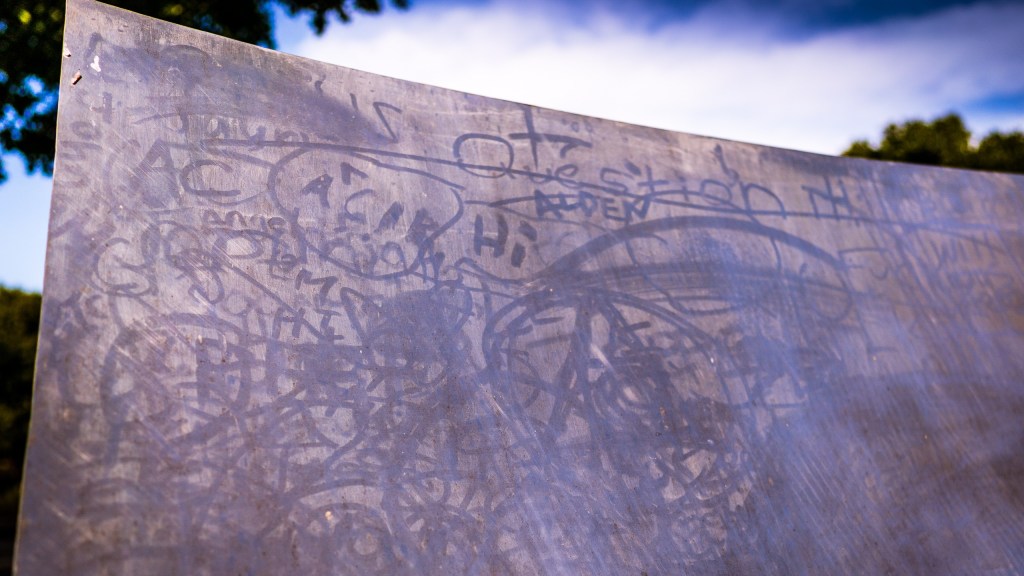
I followed a video to do bubble drawings and I’m not going to lie, it looked pretty good. This was my first time drawing my name in a different font besides my handwriting and I liked it a lot. I usually don’t do anything special with my name like write it in a different font or style because I wouldn’t think I’m that good at calligraphy or anything writing style but doing these bubble letters were really easy. I thought writing my name like this would take a while but it was actually easy and straight to the point. Would I go more into writing my name like this or in different style? Nah. Again, I’m not like my artsy friends that do bullet journals looking organized and all. I like my handwriting too so I wouldn’t change anything about it. But this was a nice experience. I will definitely try it when I have spray paint.

Artist Conversation #5

Micol Hebron

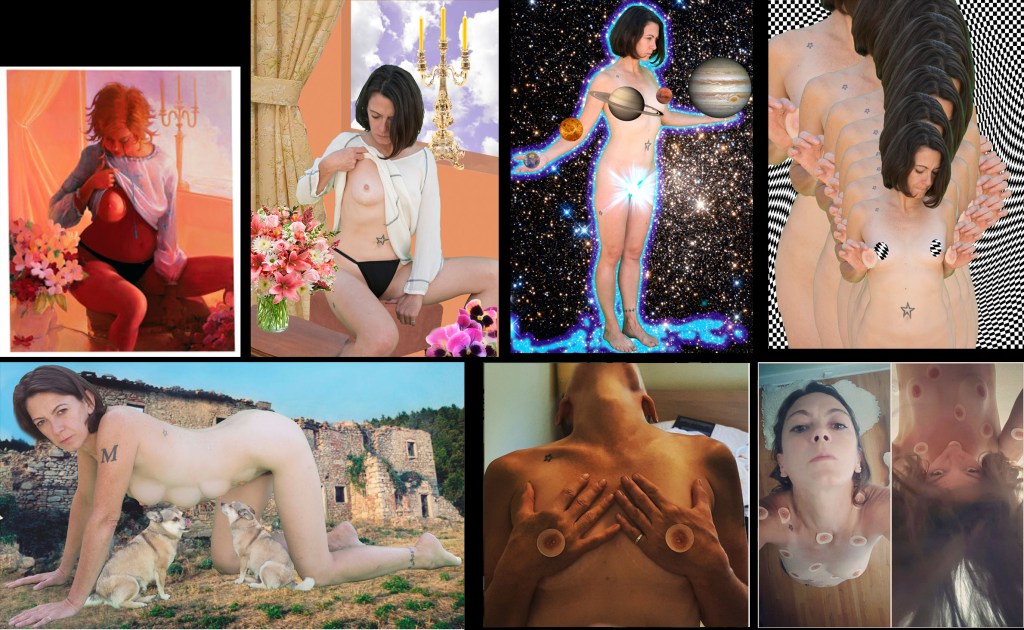
Micol Hebron is an interdisciplinary artist whose practice includes studio work, curating, writing, social media, crowd-sourcing, teaching, public-speaking, and both individual and collaborative projects. Hebron is an Associate Professor of Art at Chapman University; the founder/director of The Situation Room resource space for the creative community; the Gallery Tally Poster Project about gender equity in contemporary galleries; and the Digital Pasty/Gender Equity initiative for the internet. She uses her body as a medium to display her art through photographs and installations. She expresses her work through pedagogy, epistemology, evolutionary biology, social media, collectivity, and affect theory pieces as well as the role of the human’s body in society, especially the female anatomy.

When Hebron visited out classroom, she dove straight into her ongoing projects. The projects she showed us circulated around the topic of the female body in society. She explained to us how the female nipple is censored in media while the male nipple is not. Through this finding, she decided to push the boundaries that social media has put on the female anatomy. She pushed boundaries by replacing female nipples with male nipples because she explained that the male nipple is more accepting to the public and social media and that the female nipple is considered nudity and inappropriate. In every single topless picture and other pieces, she replaced her own nipples with a male’s or if it wasn’t her body, she would find ways to take normal things and incorporate the male nipple. As another statement to this issue, she also took the opportunity to pose topless infront of any monument she encounters throughout her travels. Through these pieces, she pushes boundaries and performs boldness in each of them. It makes the viewer uncomfortable but her purpose is to normalize the female anatomy and make us look at it as art instead of it being inappropriate.

As Hebron was showing her pieces, she explained her purpose about each piece. When she was replacing female nipple with male nipples, she was trying to prove a valid point about the inequality of human bodies between male and female. At first I thought it was her trying to be funny but the more pieces I saw, I understood her reasoning behind her pieces. By posting male nipples in front of female nipples, she is making a bold statement and heavily convincing the viewer that the female anatomy is just as normal as the male anatomy. Through these topless pieces, Hebron was also trying to show us the feminist side in her. She wanted to show us how insecure she was with her body, but the more nude pictures she took, the more comfortable and confident she became. She wanted to normalize the female body and admire it. She wanted to show that the female body can be just as accepting as the male body to society and in media.

When I was hearing her testimony, I felt empowered with her work. Her work is bold and daring to the public eye, but behind each piece is a powerful meaning. She dives into topics that are often hidden by society. Her pieces shine light to topics that are often seen as taboo, but through her works, she attempts to normalize them. I admire the work she puts out and I believe that her work resonates in my personal life.

#13 Sustainable Art

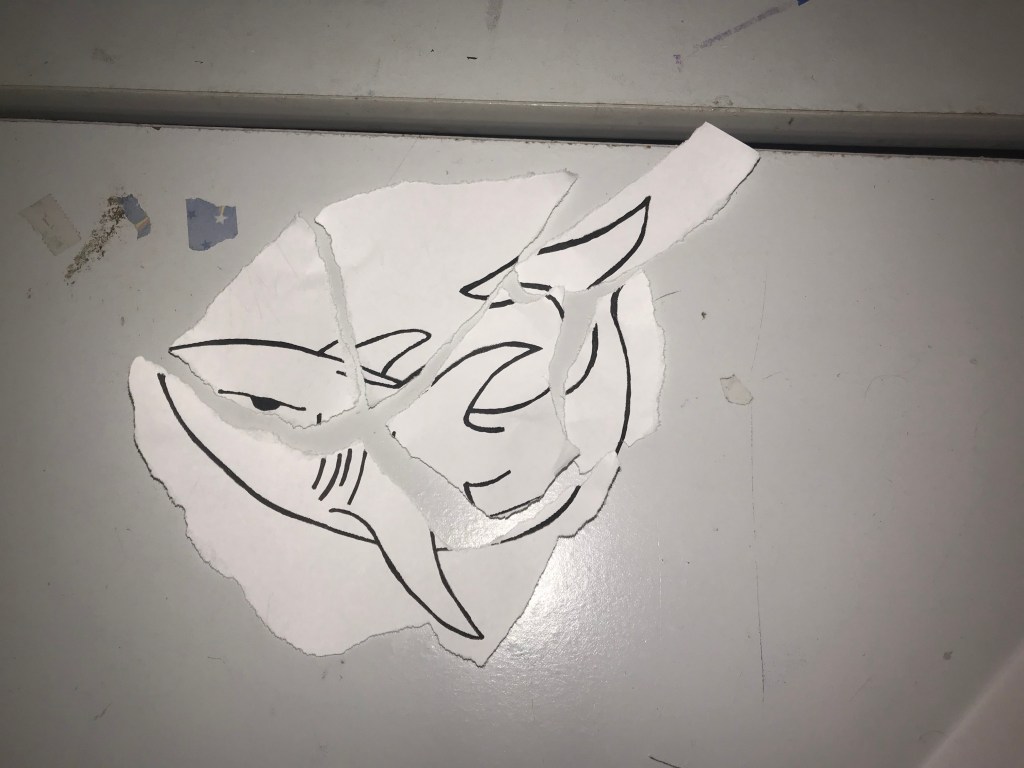
My idea was to express the things I lost or wasn’t able to experience due to the pandemic. What is show above is a sketch of a shark. I am a part of a team that builds a canoe out of concrete and compete it against 18 other schools in the West Coast. I was in charge of designing the shirts and logo for out team when we compete in CSU Fullerton but due to the virus, we were not able to because it got cancelled. I found this sketch and thought about throwing it away but I thought it was a waste of art. Since I have a digital version of it already, I decided to use the sketch and repurpose it. I ripped it up in 6 individual pieces to represent the team. Each piece represents a significant team member. I symbolizes that even though we were not able to compete and the competition is over, we still are one unit that came together to build the canoe. It is built and currently sitting behind one of the Engineering Buildings.

When it comes to art, I think it should last for as long as it can. Art cannot be destroyed unless someone does it or artist does it. But when it is untouched, it should remain untouched unless someone or the artist vandalizes it.

#12 Vitual Art Gallery

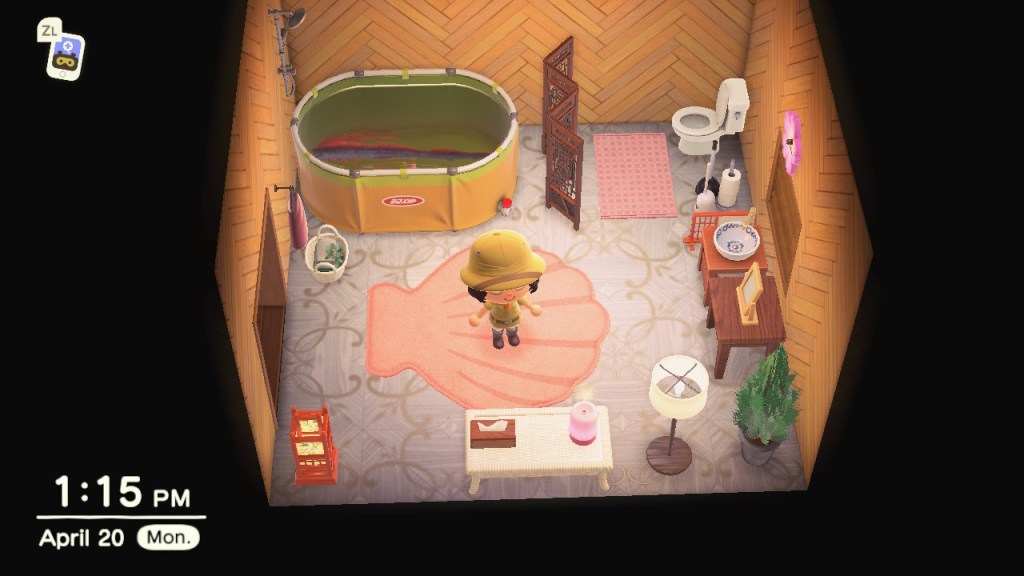
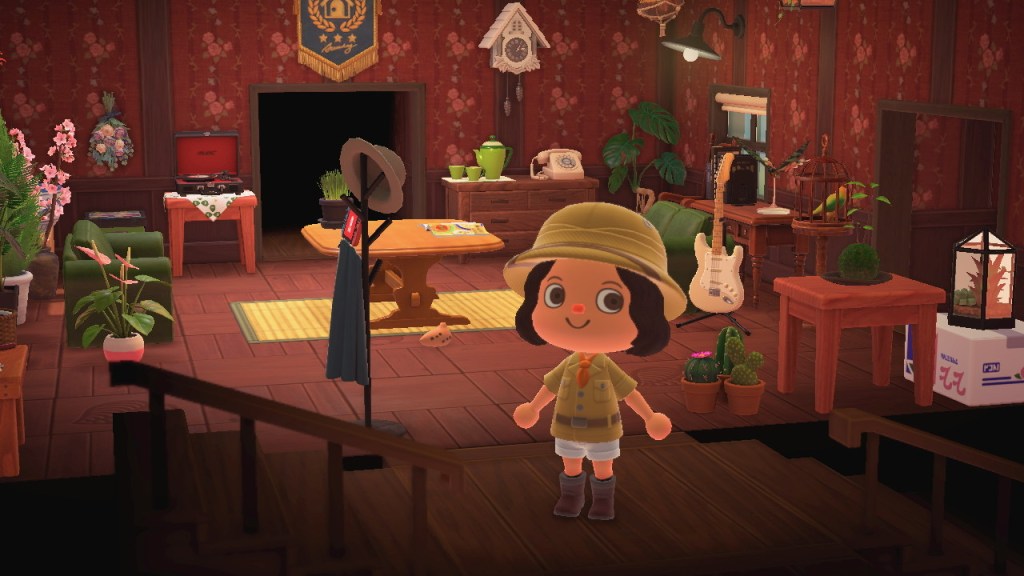
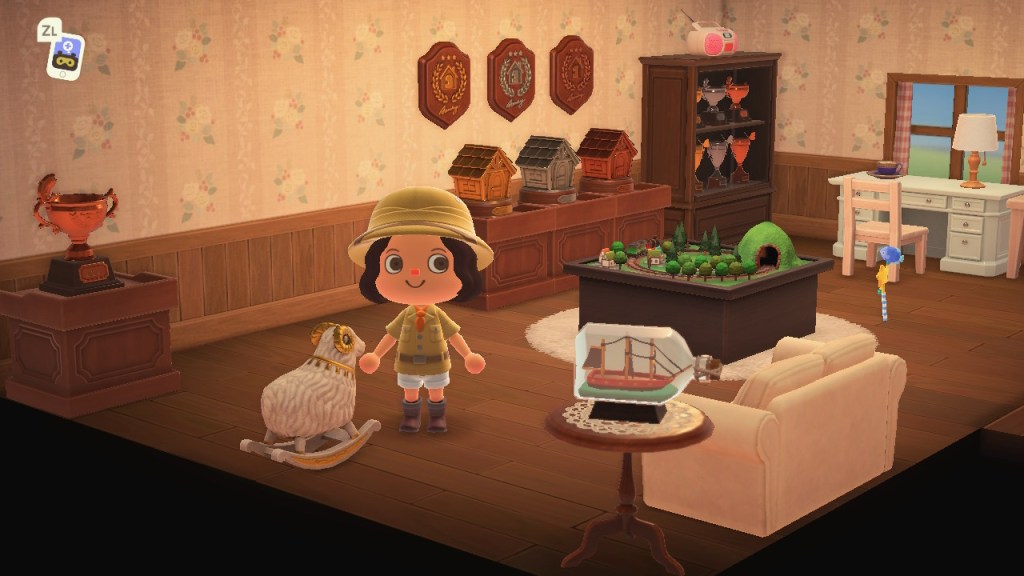
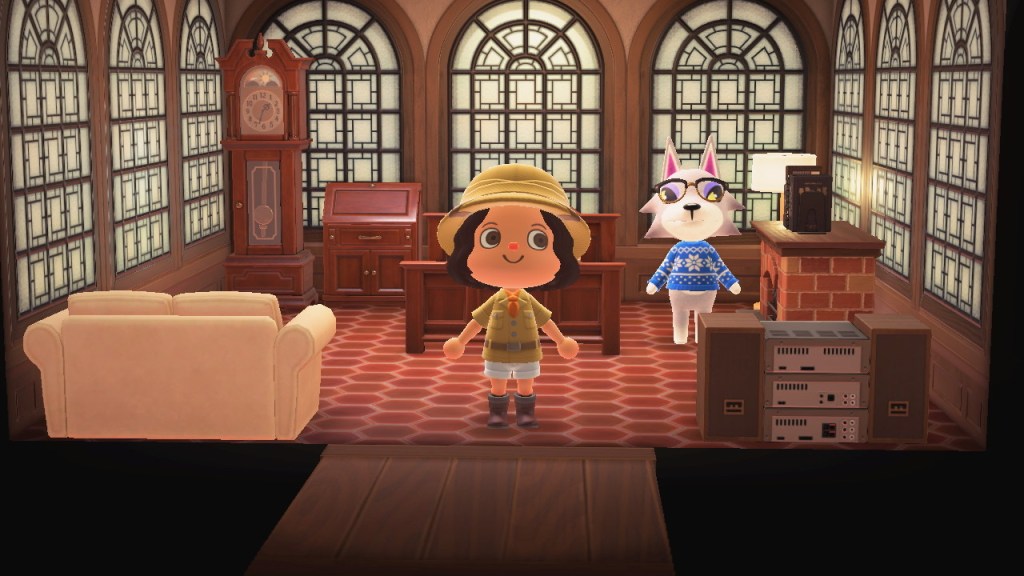
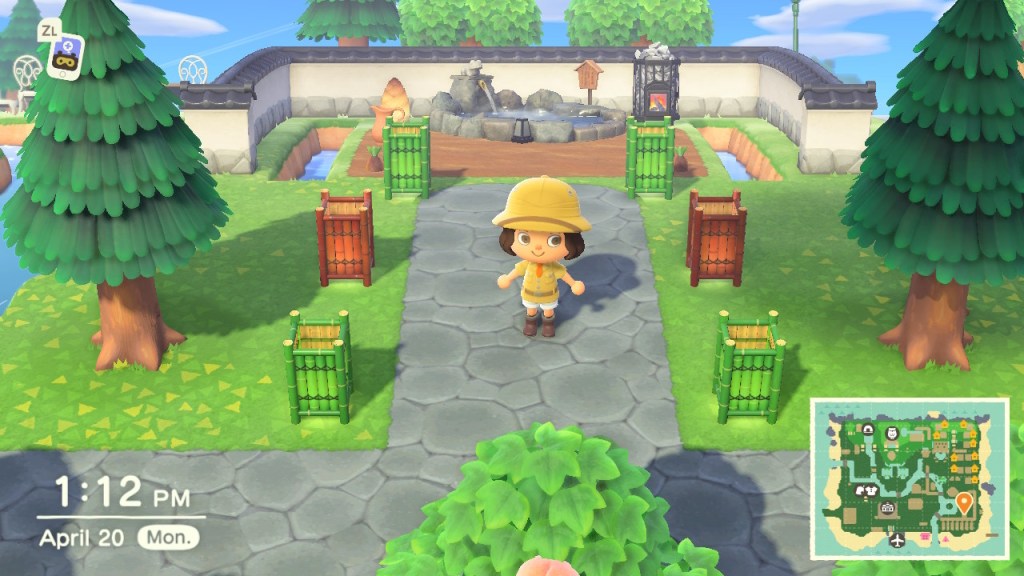
I didn’t organize my vitual art gallery in a specific order, but only in artist order. When taking pictures, I focused on their stores, homes, and other villagers’ homes. I chose these focuses because on Animal Crossing, everyone has the same store, but the decoration around each store is different because the player can choose however they wish to decorate it, as well as their own homes. As for other villagers, everyone has different villagers, and each one has their own taste in style shown through their home. Some might have generic homes but others like to add style. In this gallery, I feature the uniqueness of each player’s island in their free-for-all world.

Sapphire” – Regina Catanyag

In Regina Catanyag’s island, Sapphire, I noticed a love for greenery. All over her island, she tries her best to incorporate plants in all spaces with decorations such as potted leaves, trees, and orchards. Same in her house, she tries to incorporate plants in every room as seen as above.

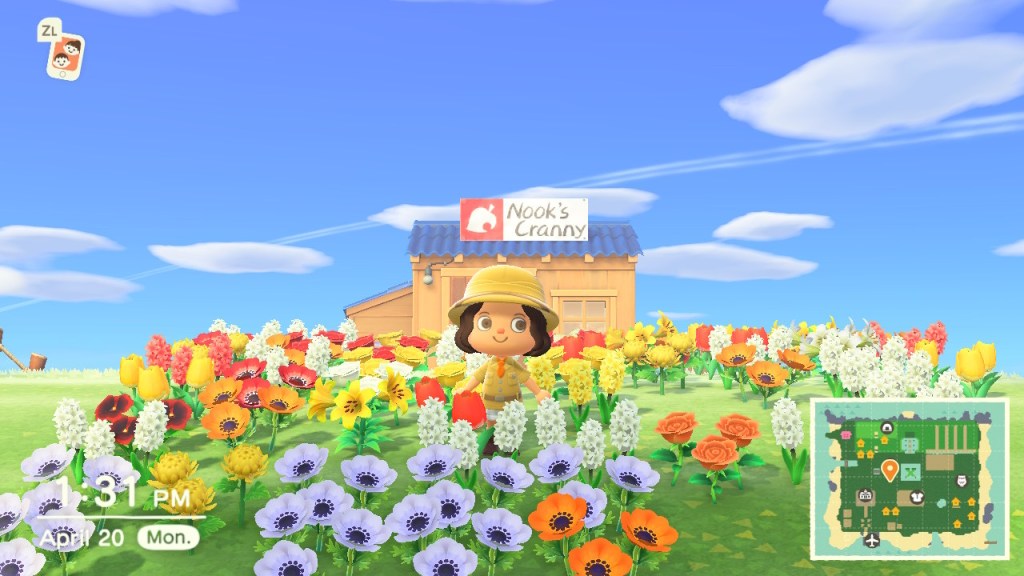
“Starheart” – Jude De Luna

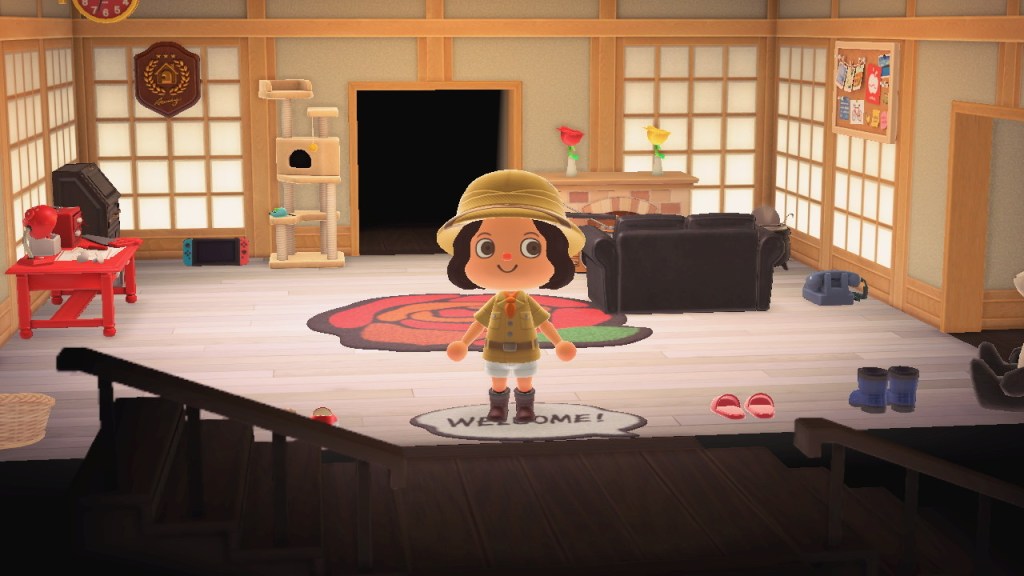
In Jude De Luna’s island, Starheart, she learns toward the flower fields. All over her island, she incorporates flowers in every patch of grass. Even in her home, it is seen that she also places flowers in pots to show her love for flowers. Along with her flowers, her villagers seem to show an opposite interest. In the villager’s home pictured, the villager shows us that their house represents a more conservative setting. Compared to the rest of the island, we can tell that De Luna’s ideas clash with the villager’s. The only way to make the villager’s home similar to the island’s theme, De Luna would have to give the villager items to decorate their house, but De Luna is more focused on making the island better.

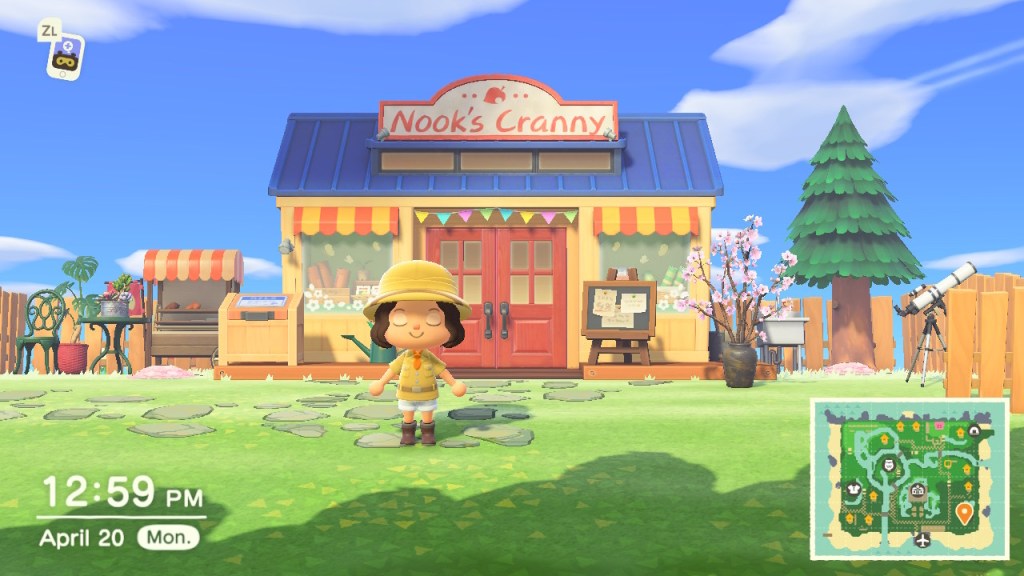
“Lottle” – Regilyn Catanyag

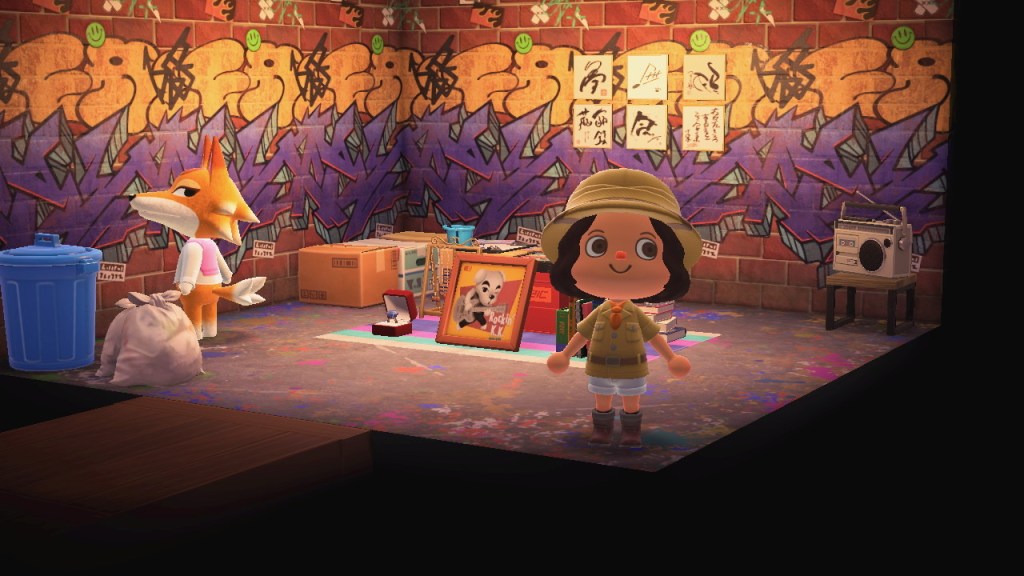
In Regilyn Catanyag’s island, Lottle, she shows that she is incoporating the traditional bamboo fields. In front of the store, she displays a cherry blossom tree that goes with her theme. As well as a hidden area, they path is lit up with bamboo lights which leads to a pond. Her theme is carried out through her island wiht more bamboo themed decorations. Sane experience with De Luna, Catanyag’s villager has a different lifestyle. The house is decorated with an “underground art scene” with spray painted walls and trash everywhere. Although their home is different with the island’s theme, it does not interfere with Catanyag’s theme of the island.

#11 Vlogging

In my vlog, I made butter. My goal was to show people how to make butter with one simple ingredient. As you watch the video, you can see me turn heavy cream into butter. Although I achieved my goal, I would like to introduced flavored butter next time by showing different ways to flavor butter with different ingredients. I would definitely vlog again but I would only put out food content.

I don’t really have a favorite YouTuber but I enjoy watching SNL skits or cooking tutorials. If I had to choose a bunch for cooking videos it would be Binging With Babish, SORTEDFood, and my guilty pleasure, Tasty. I just enjoy their content on how to show simple ingredients and turn it into something tasty. What I love about Binging with Babish is that he takes fictional food from movies and recreates them in real life.

From their work, I can apply the difference viewpoints when cooking food. I see that a lot of YouTubers show them cooking food with a birds-eye view.

Authenticity is being true to the work you are doing, and not trying to hop on a bandwagon for views. Performance is doing something through practices and delivering something you believed is worthy. Authenticity and performance work together because the work you put out is special to you if you believe that it is your own individual work and not for the views.

I think the clip from home is more performative because celebrities often have a reputation to keep up to the public, and even though one interview is at home, that doesn’t necessarily mean that the celebrities are their true self.

#10 Drawing Automatic


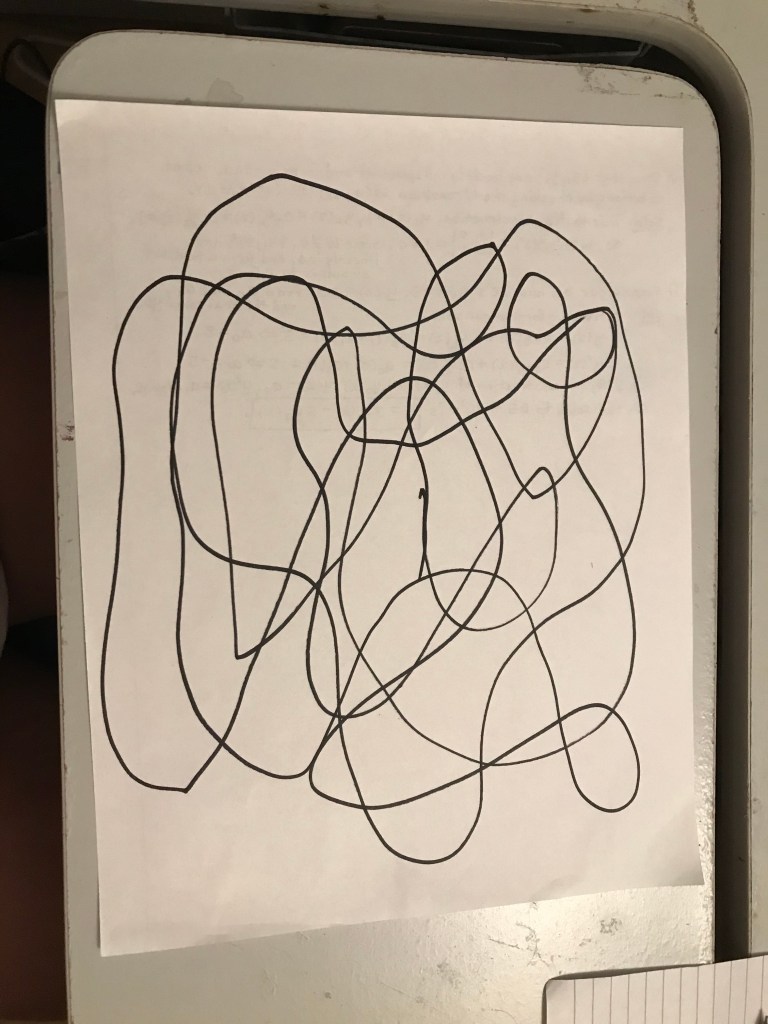
In this project, I had the help of my brother. It was awkward because we would just stare at each other and try to do this project as fast as possible. It was weird holding hands and drawing on this piece of paper, but the results were pretty expected. I didn’t expect to make something interesting or something similar to real life. I expected something abstract and totally hard to read or interpret. Looking at this piece shocked me though, not because of the piece itself but because of the experience. It was weird asking my brother for a favor so simple like this, but knowing that we both made it made this piece more special than it already is.

Artist Conversation #4

Artist Information

About the Artist

Mahsa Soroudi is an Iranian born artist and was raised in Tehran, Iran. She was brought up in a Muslim household and was raised by her mother and father, a painter whom she looked up to. She was introduced to different cultures through her travels through Asia and Hollywood movies. Soroudi soon got married and after a week both her and her husband left Iran to explore the world and find inspiration. They ended in Malaysia but settled there only for one year. Both then moved to the East Coast of US and then decided to settle in Southern California in Newport Beach.

Formal Analysis

Soroudi’s source of inspiration for her project Nature’s Cadence was through her plants she took care of when coming to the United States. In this project, she dealt with the ideal of resettlement by cutting and replanting her plants, specifically her succulents. She related to the plants with her homesickness from her motherland.

Content Analysis

Soroudi chose to base her project off of her dying plants because when observing her plants, she saw the strength and perseverance the plants went through especially when being moved to a new location. She thought that she would never settle in the United States, but when observing her succulents, she saw how they were growing their roots into the soil and related the growth to her personal growth being in a new country starting a new life. Just like how the plants adapted to their surroundings, she now looks up to the plants for inspiration to strive and succeed in the United States, especially when dealing with nostalgia and homesickness.

My Experiece

When reading and listening about her purpose for Nature’s Cadence, I was amused by the type art she chose to do. I didn’t think that using plants would be considered art. It amazed me how the idea came to her. She was sitting at home and found inspiration when she was looking at her plants. Anyone could say that they relate to a plant, but her reasoning behind it was beautifully explained. She relates the plants journey to her nostalgia and homesickness and I thought that made sense even when glancing at a dying succulent.

#7 Writing a (romantic) Pop Song

This is for my biology class.

Uracil
The only nitrogen base for me 
My dear I still cannot believe that you’re the perfect pair for me 
You and me, fit so perfectly in the sequence of DNA 
Of the double helix but 
I'm so sad when we unwind and we separate 

Because when the RNA Polymerase comes in 
We’re so near but we’re far
But with ligase glueing we always end together by the end 
You’re the perfect pair for me 

mmm guanine, thymine, cytosine, and adenine
Uracil the perfect pair for me 

Sometimes you, 
Are restricted next to the mRNA
And when it pairs with you oh i don’t know what to do but just watch it leave introns but why I don’t need to be mad 
Because the messenger has some exons and 
tRNA which has a codon of 3 and an amino acid 

mmm the mRNA leaves behind the amino acid when it finds a pair 
just like you and me 

What I’m trying to say 
is everything has a pair 
and when the anticodon finds a messenger it just stops, and forms a polypeptide chain 

mmm it first starts as initiation,
 then elongation that’s when hydrogen bonding pairs a tRNA to a mRNA, 
then termination, that’s when a stop codon is reached, and the protein is set free 

mmm the Ribosomal Rna 
has a E and P and S site bidding for an mRNA made up of the pairs of a large and small subunit 
just like you and me

 like how thymine is paired with adenine 
and guanine is paired with 
cytosine and uracil, the only pair for me

When writing this song, I was studying biology at the same time. In high school, my biology teacher would always but up these random songs about the process of photosynthesis or some other biology concept and even though it was annoying to hear, it was also catchy. I was assigned a project on the process of mitosis and I would have to teach the class the process the best I can in my own style. I didn’t want to do the simple 3D cell project, and I was stumped on ideas. It was the day before the project was done, and I did what I do best, write songs.

Writing the song was pretty easy for me because I had all the information. I knew what happens before cell division, and after cell division and all the other things in between. In this song, there were a lot of technical phrases used. At the same time I was writing this song, I was thinking of making it a love song as well. I wasn’t trying to make the whole song romantic, but I wanted it to be a cute lovely song that explained the process of mitosis.

When I presented this song to the class, I got a lot of positive reactions. The lyrics were displayed on the projector so they saw what I was trying to do. Before I presented the song, I told that them “Uracil” is a play on words for “You’re still.” When I was writing the song, I thought I was so clever for saying that. I was thinking like a rapper, how they do a lot of play on words in their songs. I think my song was effective, because when I was taking an exam, I was just repeating my own lyrics back in my head, making me remember the biology process just like how my teacher showed us those annoying high pitched catchy biology music videos.

I would definitely do this again because I think it helped me in my studies. If I were to write another song, it would probably be about school topics. I’m not much of a write when it comes to love songs or heartbreak songs because my lyrics are cliche or cheesy.

#6 Counterfactual Identity

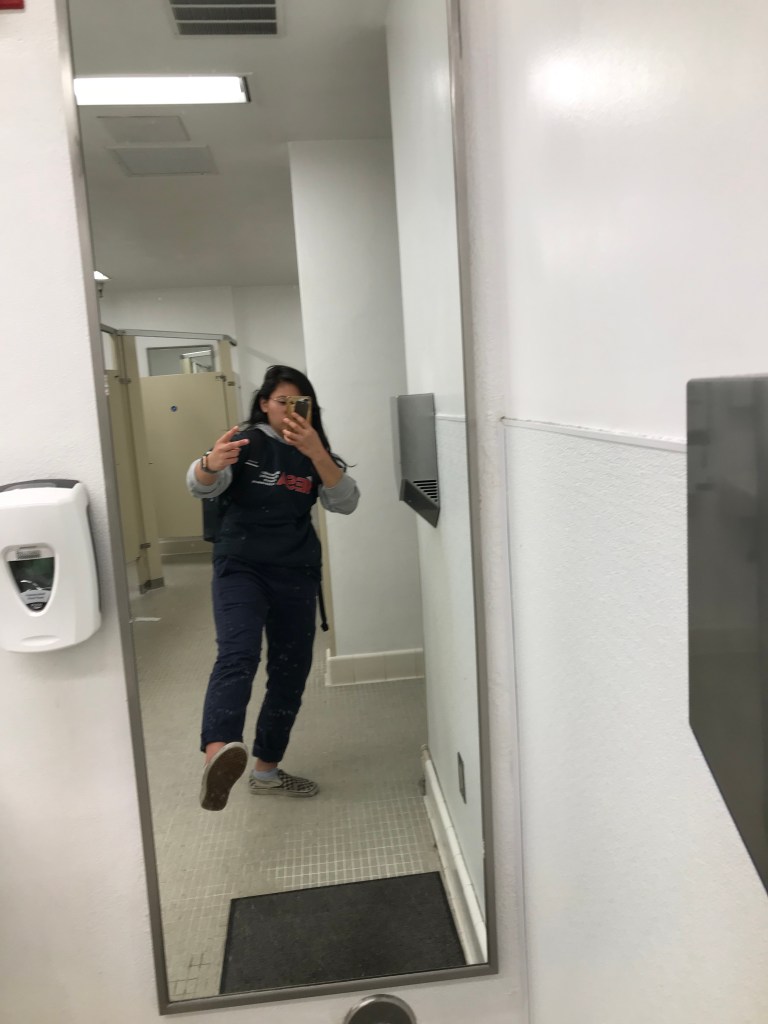
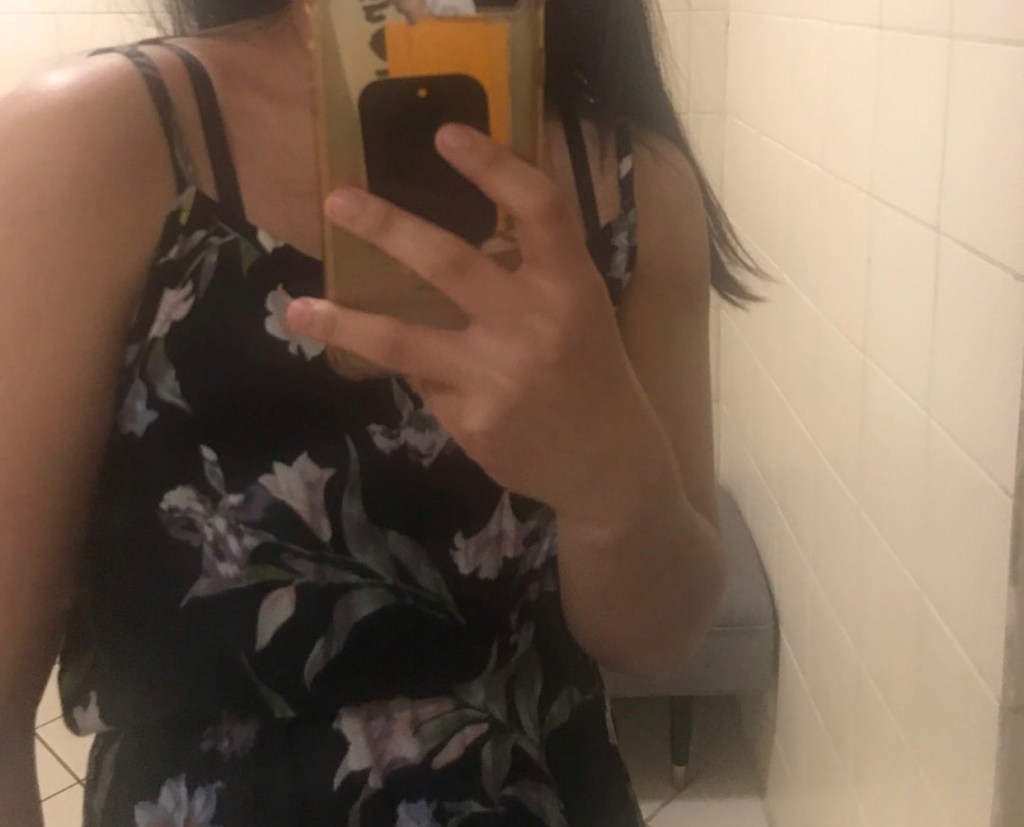
If I were to describe my everyday outfits, I would describe my style to be tomboy skater comfy look. As much as that sounds, I just find clothes that feel comfortable to me and the only time I would wear something different is when I feel like my style is getting repetitive. Like every person, I wear clothes designated for specific events. I recently decided to wear something that I wouldn’t wear for casual wear, a flower dress. I would naturally wear this during parties where the dress attire is semi-formal. Wearing this dress was definitely something out of my comfort zone, especially since I would have to wear this the whole day.

When wearing the dress around the school, no one really batted an eye except my friends that I see every time. When walking around school, strangers wouldn’t look at me in a different way. They would simply just move on with their everyday lives. When I met up with my friends, they were mildly shocked because this was something I would never wear casually. They were used to my boyish skater comfy look, but seeing me in an outfit that I would determine feminine took them aback.

I asked my friends what their first impression would be if I was a stranger. They gave me the answer that I most expected. They said that they wouldn’t bat an eye or really look that much. I then asked them what major they would see me as. Most of them said something along the lines of liberal arts. I got english, art, and music. There were a couple of friends that said biology or chemistry, but no one said my major, civil engineering.

When I asked a couple strangers what major they thought I was, they also responded with something along liberal arts or biology or chemistry. I was shocked that no one thought of my actual major.

With the reactions that I heard from my friends and stranger say, I started to wonder if looks go side-by-side with major. I recently talked to a close friend and she said that majors have their own style. For example, if it is a Kin major, they would wear sports attire because their content is circled around exercise. I noticed that looking nice isn’t normal in the engineering world unless you went to work. I’ve also noticed that art majors love to explore clothes outside their boundaries. When talking to artists, their outfits are clothes I would never work in public. I came to the conclusion that majors also have their own insecurities.

When it comes to engineering, I noticed that we are more on the conservative side. Our industry gives such a negative connotation in colorful clothes that we are stuck on wearing bland dark colors. If I were to wear clothes that an artist would wear to the workplace, I would be looked down upon. I learned that depending what major you are, you are held to these expectations about your clothes. Being able to express yourself through your clothes is limited because of the major and the workplace I am in. Wearing this dress throughout the day was uncomfortable to me because it is something I would never wear, but I also felt free because I wasn’t confined to a type of clothing.

Artist Conversation #2

Benjamin Kaita

Exhibition Information

  • Artist: Benjamin Kaita
  • Exhibition: Nuccio Group, Near Far
  • Media: Charcoal on paper
  • Gallery: Dutzi

About the Artsist

Benjamin Kaita, Ben, is a undergraduate transfer student at Long Beach State’s School of Arts. He is currently pursuing his BFA in Drawing and Painting. His current emphasis is on charcoal drawings. In his submission, he created four different pieces revolving around the topic of horses. In these pieces, he is explaining his definition of Near Far which is the separation between humans and nature.

Formal Analysis

When looking at his pieces, Kaita only used charcoal and paper. I asked why, and his simple answer is that he was exploring what he can do with charcoal and paper. On each piece, he spent about one month starting and finishing. He told me that right before the deadline for the gallery, he finished his last piece. I noticed that in each piece, he mentions a horse or draws a horse. I asked why horses, and he responded that he was playing around with the idea of horses and he stuck with it for all these pieces.

Content Analysis

Kaita created four different pieces that were based on the same idea, human being’s relationship to nature.

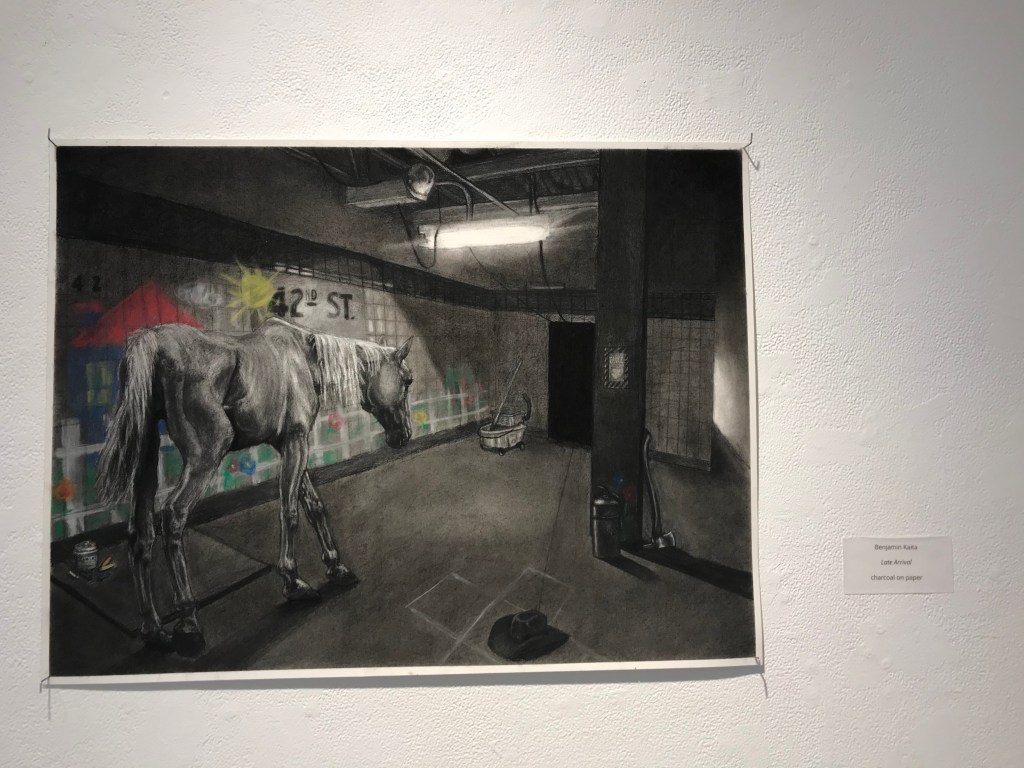
In his first piece, he was depicting the depleting reliance human beings have on horses. Horses used to be the main source of transportation but as technology got more advance, humans rely more on trains and cars to take us places. In this piece he draws picture of a horse with it’s life sucked out of its body roaming around the subways. Kaita explains that the horse is stuck in this subway station that it becomes long forgotten.

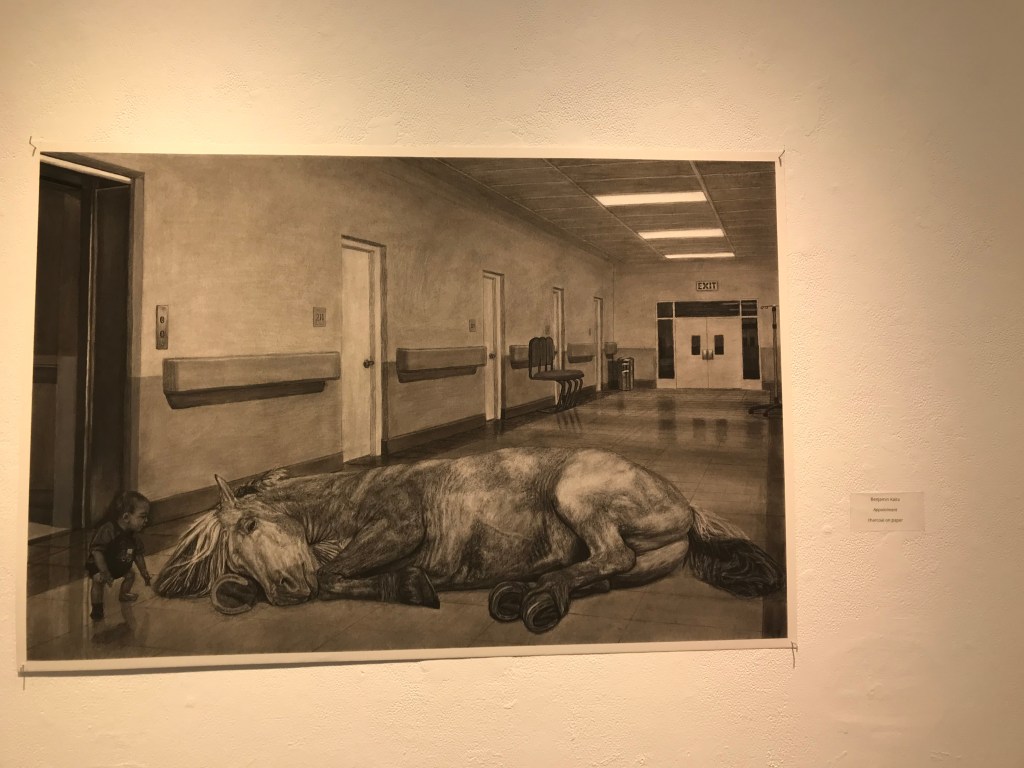
In this second piece, Kaita is trying to depict the different environments nature is present. The horse is a representation of the world of nature. It is placed in a human setting, a hospital. This contrast shows how the humans and nature lives in two different worlds. Humans are so concentrated in their own world, that it’s weird to look at this picture normal because we don’t associate hospitals with nature. Kaita wanted to emphasis the growing divide between the human world and nature.

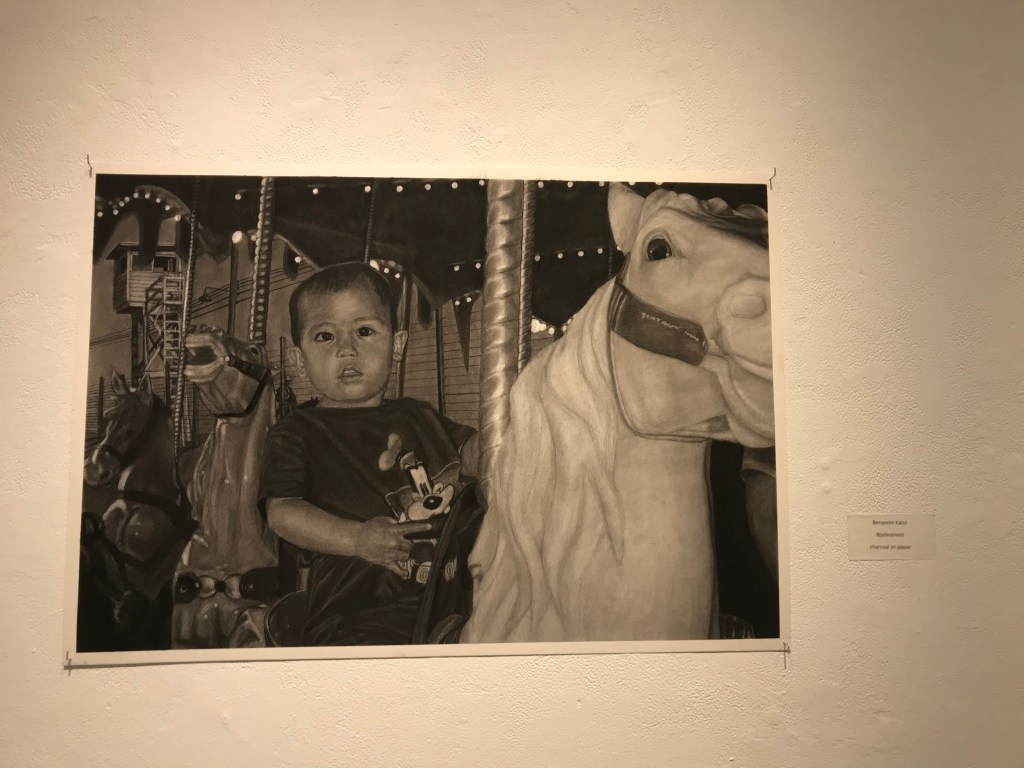
In his third piece, Kaita recreates a childhood photograph of him at a Disneyland carousal, but puts a twist on his photograph. Kaita told me that when he was younger, he lived on a ranch with horses on it. He goes on to tell me that his sister owned a horse that was dear to him and he grew up with the horse. When I asked him about this piece, I asked him if it was a photograph and he told me that it was an old photograph of him at Disneyland. He then went on to tell me the changes he made. In the background, instead of depicting the background of Disneyland, he changed the background to fences. He wanted to show how humans held the horses captive instead of letting them roam free. By adding a fence, he implies how instead of horses roaming free and letting nature guide them, humans take in these horses and imprison them preventing them from freedom.

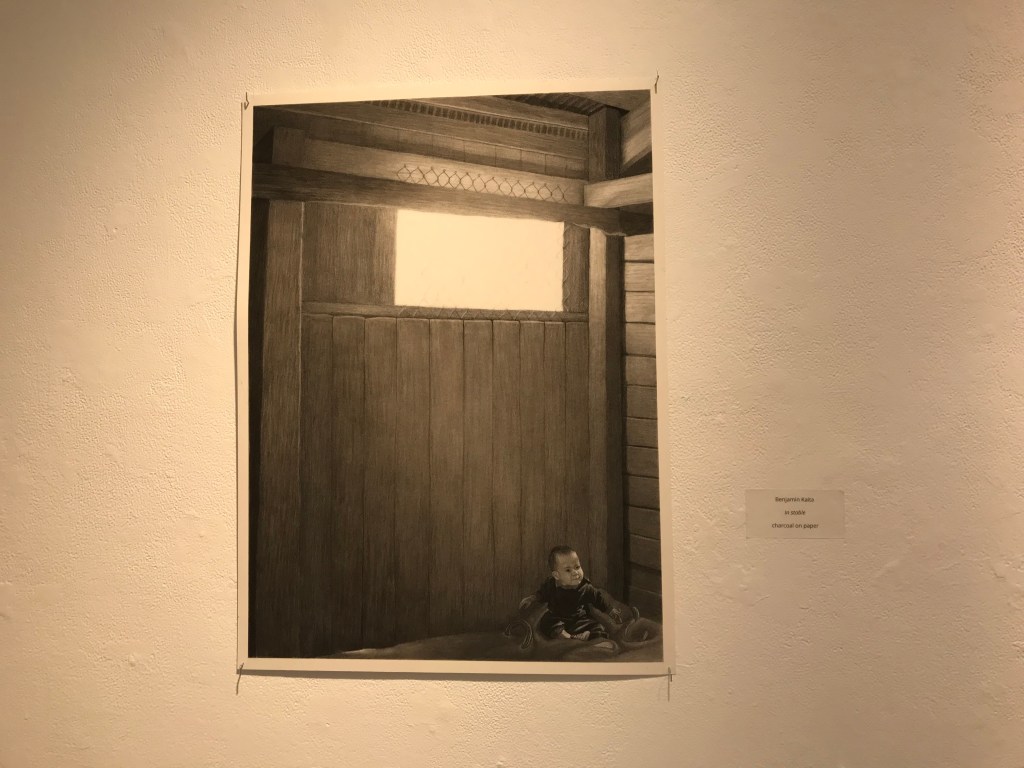
In this last piece, Kaita places a baby in a stable. When I asked about the meaning behind this piece, he went on to tell me about his childhood on the farm. The piece is called “Stable” and he told me that a stable is usually where they store the horses, but when he drew a baby in the stable, he wanted to make the irony of placing a living being in a stable. He explained to me that when placing animals in a stable, we don’t view them as one of us. By placing a human baby in the stable, it makes the viewers be aware of the abuse humans put by placing animals in stables.

My Experience

When looking at these pieces, I was somewhat weird out. I thought Kaita was one of those horse people from my elementary school days, but learning about his process and reasoning to these pieces made me think otherwise. In the topic Near Far, Kaita successfully explains his take on the topic. In each piece, he explains the divided relationship between humans and nature. He explains how misplaced nature is and how blind humans are. When learning about his meaning behind the piece, I was enlightened with his take on human interactions with nature. He explains to me that we often forget the things nature offers us and we end up replacing nature with artificial things.

Design a site like this with WordPress.com
Get started